On this page
- Is it safe to see Komodo dragons?
- What should you do before the walk starts?
- What does Komodo dragon safety require on the path?
- How close should you stand to a dragon?
- What if a dragon moves toward you?
- Should you run from a Komodo dragon?
- Why can calm-looking dragons still be a risk?
- What about medical help?
- What else do people ask about staying safe?
- Which sources support this page?
- How do I reach the desk?
By See Komodo Dragons Editorial Desk
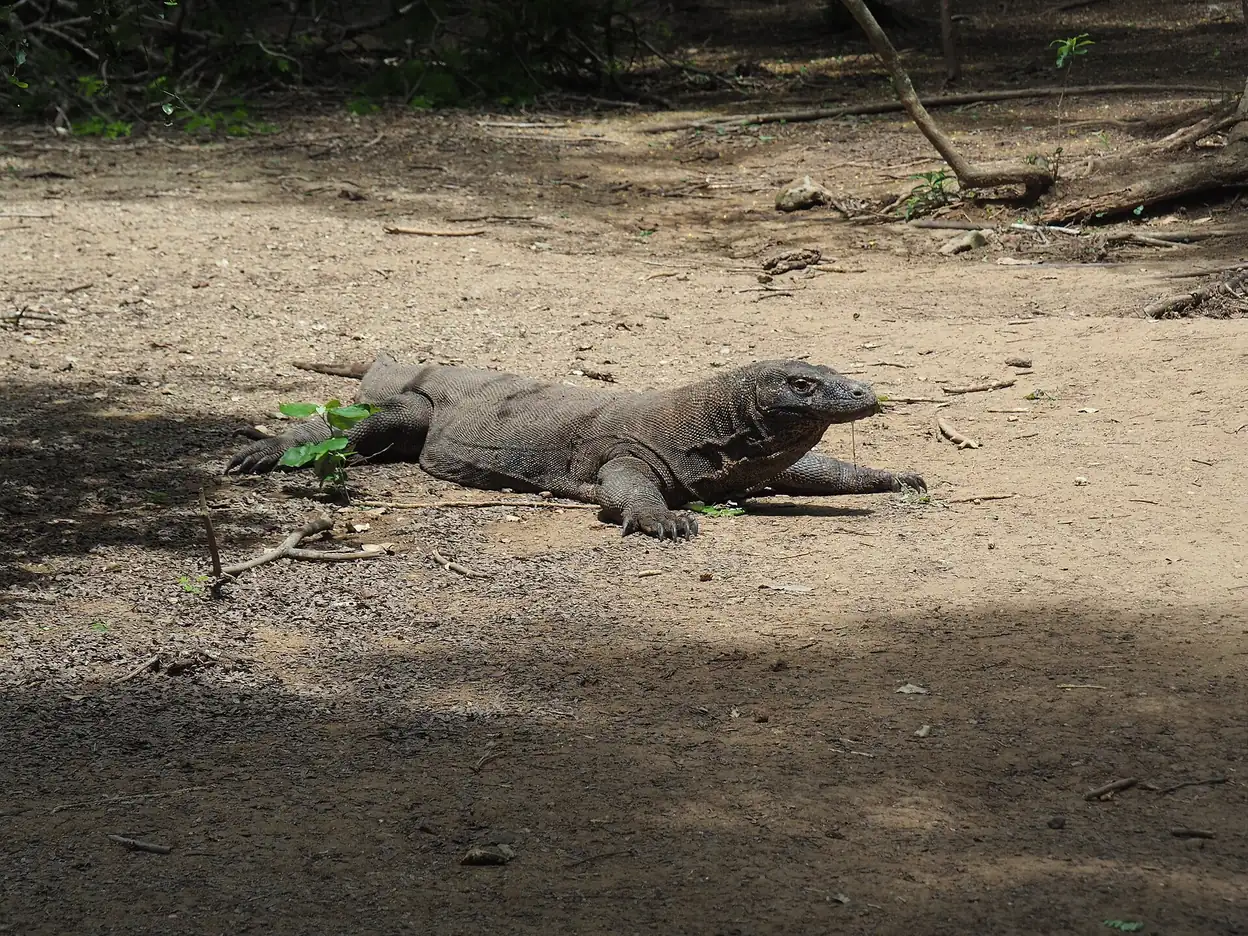
Komodo dragon safety comes down to following your ranger or guide, staying on the route and keeping your distance. Nobody can guarantee a safe walk, because dragons are wild carnivores. The park's official protocol lists prohibitions. Detailed advice on distance and movement comes from operators and guide sites, and they do not all agree.
Is it safe to see Komodo dragons?
Reported attacks are few, and the risk is real. Smithsonian magazine calls attacks on humans exceptionally rare and says most involve a park guard whose attention slips or a villager out of luck. Our record of incidents is on the page asking are Komodo dragons dangerous, so this page stays on conduct.
One case shows why conduct matters. A visitor was bitten in May 2017 while photographing feeding dragons, and the park's head said warnings had been ignored. Our record of attacks has the detail.
What should you do before the walk starts?
The sources for each item differ in standing, so we name them.
- Dress for rough ground. Green Rinjani, a trekking operator, advises sturdy closed-toe shoes, not sandals, plus a hat, sunscreen and water.
- Pack your own medication. Green Rinjani says medical access on the islands is limited.
- Check your insurance wording. The UK government advises travellers to Indonesia to hold cover for local treatment or unexpected medical evacuation. That advice is general and does not address Komodo specifically.
- Look at the boat. The UK government also warns that sea conditions can change rapidly and boat travel in Indonesia can be dangerous, and it advises checking the safety equipment.
- Speak up if you are menstruating. Green Rinjani tells menstruating visitors to inform their ranger before the walk. The operator cites no study. Our page on Komodo dragons and menstruation covers what is claimed.
- Attend the briefing. The Komodo Guide site, a community guide, says rangers give a mandatory pre-trek safety briefing at Loh Liang. Use it to ask which way the group moves if a dragon blocks the path and where you may stand for photographs.
What does Komodo dragon safety require on the path?
The closest thing to Komodo National Park safety rules is the park's visitor protocol, and four of its prohibitions set the frame. You may not ignore instructions from officers or the naturalist guide. You may not trek off the set routes or zones. You may not touch animals or stand too close to them. You may not feed wildlife.
Wikivoyage says touring without local guides is neither permitted nor advisable, and Green Rinjani says visits must be with an official ranger or licensed guide and that visitors may not explore on their own. Read this as reported practice backed by the rule on following instructions.
The Komodo Guide site says each trekking group gets a guide at the front and one at the rear, and that rangers carry forked wooden staffs to direct dragons away. Our page on Komodo National Park rangers says more about their role.
Wikivoyage warns of snakes, including cobra and Russell's pit viper. Ask your ranger. Green Rinjani separately advises against walking into bushes.
How close should you stand to a dragon?
The park's own pages give no number. Three sources say three different things:
| Source | Type | What it says |
|---|---|---|
| Park visitor protocol | Official | Prohibits being too close. States no distance. |
| Komodo Resort | Dive operator | Says the park requires a minimum of 2 m. |
| Green Rinjani | Trekking operator | Says around 3 to 5 m is commonly recommended, subject to the ranger's instruction. |
The ranger's instruction decides on the day. If the ranger sets a line, that line applies. Green Rinjani also advises against moving close for photos and against standing between a dragon and its path. For more on the numbers, read how close you can get to Komodo dragons.
What if a dragon moves toward you?
Follow the ranger. That is Green Rinjani's advice, and the official protocol's rule on instructions points the same way. The notes below report what zoo biologists have published about the animal. They are biology and not a script for the moment.
- Speed. Smithsonian's National Zoo says dragons can briefly reach 16 to 20 km/h. Our page on how fast Komodo dragons can run gives context. Can you outrun a Komodo dragon? The running section below sets out why two published writers disagree on the question.
- Sight. The zoo says they can see up to about 300 m and pick up movement better than stationary objects.
- Hearing. The zoo says they have a much smaller hearing range than humans and cannot hear low-pitched voices or high-pitched screams. Tell the ranger what you see.
Move where the ranger directs, and move when told.
Should you run from a Komodo dragon?
The published advice conflicts, and neither version comes with evidence from visitors. Rob Pilley, a herpetologist and wildlife filmmaker, told National Geographic never to run, because that is what prey animals do. A Forbes contributor goes the other way, with a tip to climb high in a tree or run in a zigzag, and adds in the same line that it might not work. Neither writer is describing a tested method. The instruction that applies before either of them is simpler: Green Rinjani says to follow the ranger if a dragon moves toward the group, and the park protocol bans ignoring the officer or guide on duty.
Why can calm-looking dragons still be a risk?
A dragon lying still near a ranger station is still a wild carnivore. The park authority describes dragons as active by day, carnivorous and scavenging, and occasionally cannibalistic. An animal resting in shade may simply be waiting out the heat, on the daily rhythm San Diego Zoo Wildlife Alliance describes.
A 2018 paper reports less wariness in dragons exposed to ecotourism, and links this to feeding and food refuse. The park protocol bans feeding wildlife and litter of any kind. Komodo Resort, a dive operator, also advises not bringing food on trails, without citing a study.
What about medical help?
Do not count on treatment nearby. Green Rinjani says medical access on the islands is limited, and past incident reports describe people being moved off the islands for treatment. We cannot state what facilities exist or how long a transfer takes on your date, and this page gives no treatment advice. If you or someone with you is bitten, tell the guide at once and seek emergency care. Our page on the Komodo dragon bite reports what published case reports describe.
What else do people ask about staying safe?
How can I stay safe while viewing Komodo dragons?
Walk with your guide, stay on the route, keep the distance your ranger sets, and do not feed or touch any animal. No source can promise a walk without incident. If you are still planning where to see Komodo dragons, start with the overview.
Should I run if a Komodo dragon approaches?
The park protocol states no rule on running, and published advice conflicts. Green Rinjani says to follow the ranger. See the section above on running from a dragon.
What should I do if a Komodo dragon follows me?
Tell the ranger immediately and do what the ranger says. Green Rinjani advises against walking into bushes or standing between a dragon and its path.
Is travel insurance necessary for seeing Komodo dragons?
The park pages we cite state no insurance requirement. The UK government advises travellers to Indonesia in general to hold cover for local treatment or unexpected medical evacuation. Check with your insurer that trekking and boat days are covered.
Is the two-metre distance an official rule?
Komodo Resort, a dive operator, says the park requires two metres, and Green Rinjani says three to five metres is commonly recommended. The official protocol says only not too close, so the ranger's instruction decides.
Which sources support this page?
- Smithsonian magazine: Komodo dragon encounters
- CBS News: tourist bitten, 2017
- Green Rinjani (trekking operator): safety information
- UK government: Indonesia health advice
- UK government: Indonesia safety and security
- Komodo Guide: Loh Liang ranger station
- Komodo National Park: visitor protocol
- Wikivoyage: Komodo National Park
- Komodo Guide: Loh Buaya ranger station
- Komodo Resort: park entrance fees
- Smithsonian's National Zoo: Komodo dragon
- National Geographic: where Komodo dragons really live, 2020
- Forbes contributor: how and where to see Komodo dragons, 2024
- Komodo National Park authority: fauna page
- San Diego Zoo Wildlife Alliance: Komodo dragon
- Biodiversity and Conservation: 2018 study (PDF copy)
- Komodo Resort: visiting Komodo with kids, 2026
How do I reach the desk?
A request through the desk can lead to a paid booking, so we have a commercial interest. Worried about a child, a mobility limit or a medical condition on a walk? Speak to your doctor before you travel, and to the ranger on the day. The desk gives no medical advice and cannot vouch for safety, so use it only for logistics. Message +62 811-3823-875 on WhatsApp, or email the desk.
Send the desk your dates and where you are coming from. The desk replies in writing.
Ask the desk on WhatsApp sales@komodoluxury.com