On this page
By See Komodo Dragons Editorial Desk
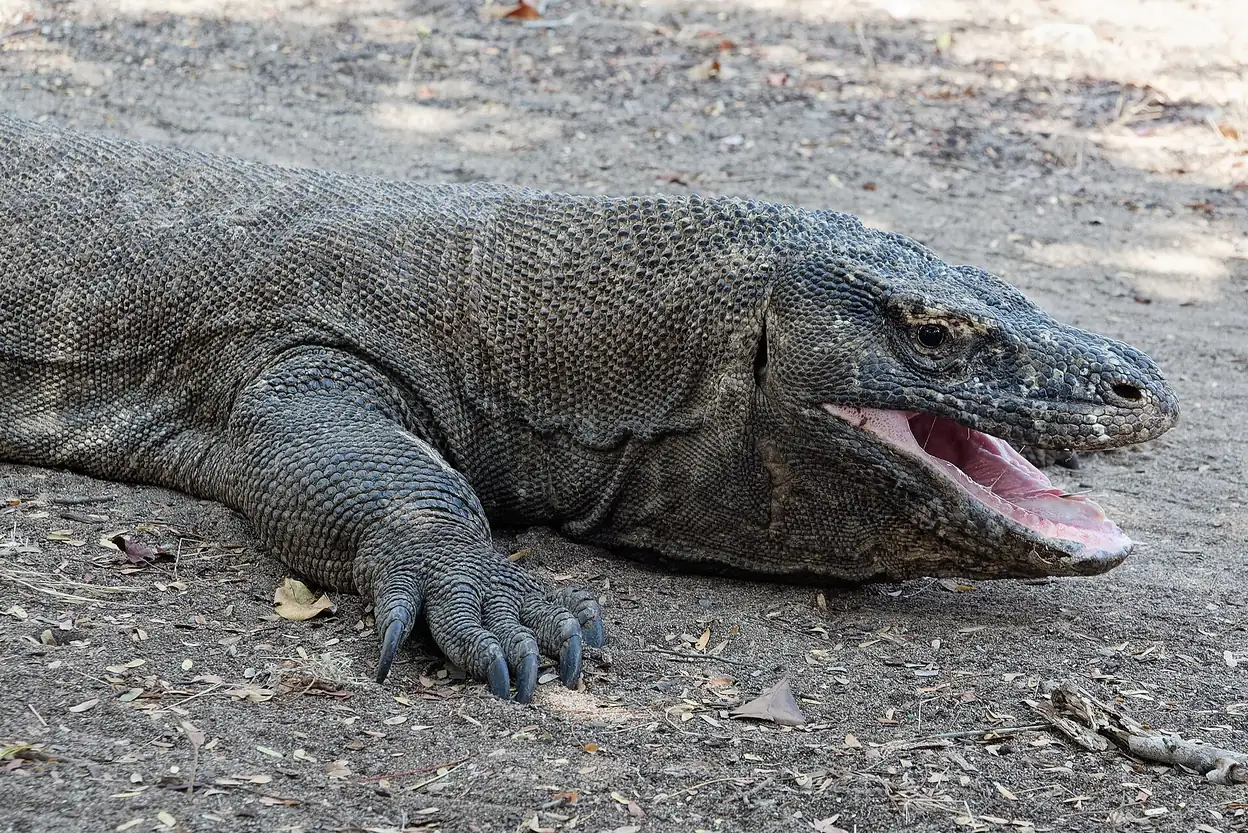
A Komodo dragon bite leaves deep wounds, and a 2009 paper in PNAS argued that venom from a gland in the lower jaw adds to the damage. The old theory that mouth bacteria finish off prey has been disputed. Bites to people are rare, published cases vary in severity, and anyone bitten needs emergency care.
Are Komodo dragons venomous?
Published science says yes, with a qualifier about how much that venom matters to people. A 2009 paper in PNAS reported a compound venom gland in the lower jaw and argued that venom with anticoagulant and shock-inducing effects works together with deep wounds. Smithsonian's National Zoo also describes a venom gland in the lower jaw.
In plain terms, it argues that wound and venom act together: the venom hinders clotting and pushes the victim toward shock while the deep cuts do their share. That argument concerns how the animal brings down prey. Translating it into what happens in a person is harder, because the human evidence consists of a small number of individual reports. One of them, described below, found no systemic signs of envenomation in a keeper bitten on the leg. A single case cannot settle the question of whether the venom is dangerous to humans. It does mean you should be wary of two opposite claims: that a bite is certain to poison you, and that the venom is irrelevant.
What happened to the bacteria theory?
For years the standard story was that a dragon's filthy mouth killed its prey through infection. The venom finding undercut that account. Wikipedia says the discovery disputed the earlier theory that bacteria caused prey deaths.
Komodo dragon bacteria are a separate question, and here sources need careful reading. Smithsonian's National Zoo says some 50 bacterial strains have been found in dragon saliva. A study of saliva and gingiva from 16 captive dragons reported that no virulent species were isolated, under a title announcing new implications for the bacteria-as-venom model.
These two statements do not cancel out. Finding many strains is a different claim from finding dangerous ones. The limit on the study is that its animals were captive, so it cannot tell you exactly what lives in the mouth of a wild adult feeding on large prey. The fair summary is that the dirty-mouth story has lost its central place. If anyone is bitten, seek emergency care.
What do published Komodo dragon bite cases show?
The medical papers describe zookeepers. Smithsonian magazine notes these zookeeper reports and the papers published from them, a reminder that reported bites are not limited to the wild. The reports themselves repeat that bites to humans are rare.
| Published report | Patient | Injury | What the report records |
|---|---|---|---|
| Wilderness and Environmental Medicine | Zoo keeper | Bite to the hand | Wounds cleaned, antibiotics started, healed with no infection |
| Journal of Emergency Medicine | Zoo keeper | Bite to the leg | Local tissue damage, no systemic signs of envenomation |
| 2021 foot and ankle case report | Zoo keeper | Attack to the foot and ankle region | Tendon and neurovascular injuries |
Three patterns stand out. The mechanical damage can be serious regardless of any venom, as the third case shows. Outcomes differ widely. And all three patients were keepers in a zoo setting, so none of the papers describes a bite on a remote island. These reports are descriptions of what happened to specific people. They are not instructions, and the treatment given in them should not be copied.
That also limits what can be said about Komodo dragon bite symptoms. The record shows local tissue damage, tendon injury and nerve or blood-vessel injury. It is too thin to support a checklist of what a bite will feel like or how it will progress.
Can you survive a Komodo dragon bite? People have: none of the reports above describes a death. Fatal attacks on people are also on record, and our page on whether Komodo dragons are dangerous sets them out with dates. It is the better place to weigh overall risk.
Which bite claims should you doubt?
Claims about bites often take one detail from the record and drop its limits. Here are four claims set against the sources.
| Claim | What the sources support |
|---|---|
| The mouth is so dirty that infection does the killing | Disputed as the explanation for prey deaths, per Wikipedia's summary of the venom finding; the captive saliva study isolated no virulent species |
| A bite always kills | None of the three keeper reports records a death, though fatal attacks on people have happened |
| The venom does nothing to people | One keeper showed no systemic signs of envenomation; one patient cannot establish a general rule |
| Cleaning and antibiotics sort it out | One keeper healed with no infection after that care; another report records tendon and neurovascular injuries, so one good outcome is not a forecast |
A case report describes one patient and has no comparison group, so it cannot give you an infection rate, an envenomation rate or a survival figure. That is why this page offers no percentages. All three keepers were also hurt in a zoo setting, which differs from a remote island in ways the papers do not measure. Whichever way the venom and bacteria arguments settle, the response stays the same: a bite is an emergency, and the decisions belong to clinicians.
What would happen after a bite in the park?
No source sets out a procedure or a transfer time for the park. Smithsonian magazine records one route in some detail: a guide bitten in an office on Rinca in 2009 was treated in Flores, then flown to Bali for treatment and 55 stitches. That is a single event from years ago and not a timetable.
Its use for a traveller is simpler. A serious injury on these islands can involve a sea crossing and more than one transfer, so the planning has to happen before you leave. Reduce the chance of an encounter first by following the guidance on our Komodo dragon safety page.
Then sort out the paperwork before departure. General advice from the UK government is to travel to Indonesia with insurance that covers local treatment or unexpected medical evacuation. That advice is general and not specific to Komodo. Read your own policy for wording on remote areas and evacuation, keep the emergency number where you can reach it, and make sure someone in your group knows where it is. Ask whoever runs your boat what its plan is for a medical emergency on the water and who on board makes that call. If the answer is vague, you have learned something useful before you pay.
Nothing on this page is medical advice. Komodo dragon bite treatment is for emergency clinicians to decide. If you or someone with you is bitten, seek emergency care immediately and follow the medical staff who treat you.
What else do people ask about bites?
What should I do after a Komodo dragon bite?
Treat it as a medical emergency. Alert the ranger or guide straight away, get to emergency care as fast as you can, and follow the clinicians who treat you. Published case reports describe zoo patients and should not be used as a guide to treatment.
Have tourists been bitten by Komodo dragons?
Yes, though Smithsonian magazine says attacks mostly involve park guards or villagers. The tourist case from May 2017 is set out on our attack record page.
Is Komodo dragon saliva full of deadly bacteria?
That idea is now disputed. Smithsonian's National Zoo says about 50 strains have been found in saliva, while a study of 16 captive dragons isolated no virulent species. Captive animals may differ from wild ones, so the question is not fully closed.
Is Komodo dragon venom dangerous to humans?
Evidence in people is limited. The 2009 paper described anticoagulant and shock-inducing effects in the context of prey. One keeper case found no systemic signs of envenomation. Serious harm can come from the wound itself, so any bite needs emergency care.
Which sources support this page?
- PNAS, 2009: venom gland paper
- Smithsonian's National Zoo: Komodo dragon
- Wikipedia: Komodo dragon
- Study of saliva and gingiva from 16 captive dragons
- Smithsonian magazine: Komodo dragon encounters
- Wilderness and Environmental Medicine: hand bite case
- Journal of Emergency Medicine: leg bite case
- Foot and ankle case report, 2021
- UK government: Indonesia health advice
How do I reach the desk?
The desk is a travel contact, not a medical service, so never use it in an emergency. For planning questions, use WhatsApp +62 811-3823-875 or email the desk. Planning requests may lead to a paid booking, which is our commercial interest, and only a written offer binds anyone.
Send the desk your dates and where you are coming from. The desk replies in writing.
Ask the desk on WhatsApp sales@komodoluxury.com