On this page
- What do the Komodo National Park rules prohibit?
- Which rules matter most on a dragon walk?
- Which rules are easiest to break by accident?
- What happens if you break a rule?
- What are the rules on drones and filming?
- What about tickets and timed entry?
- What should your group check before the walk?
- What else do visitors ask about the rules?
- Which published prices did we check?
- Which sources support this page?
- How do I reach the desk?
By See Komodo Dragons Editorial Desk
Sourced figures: prices in the table carry their source and check month. Fees change, and they are official or third-party figures, not our offers.
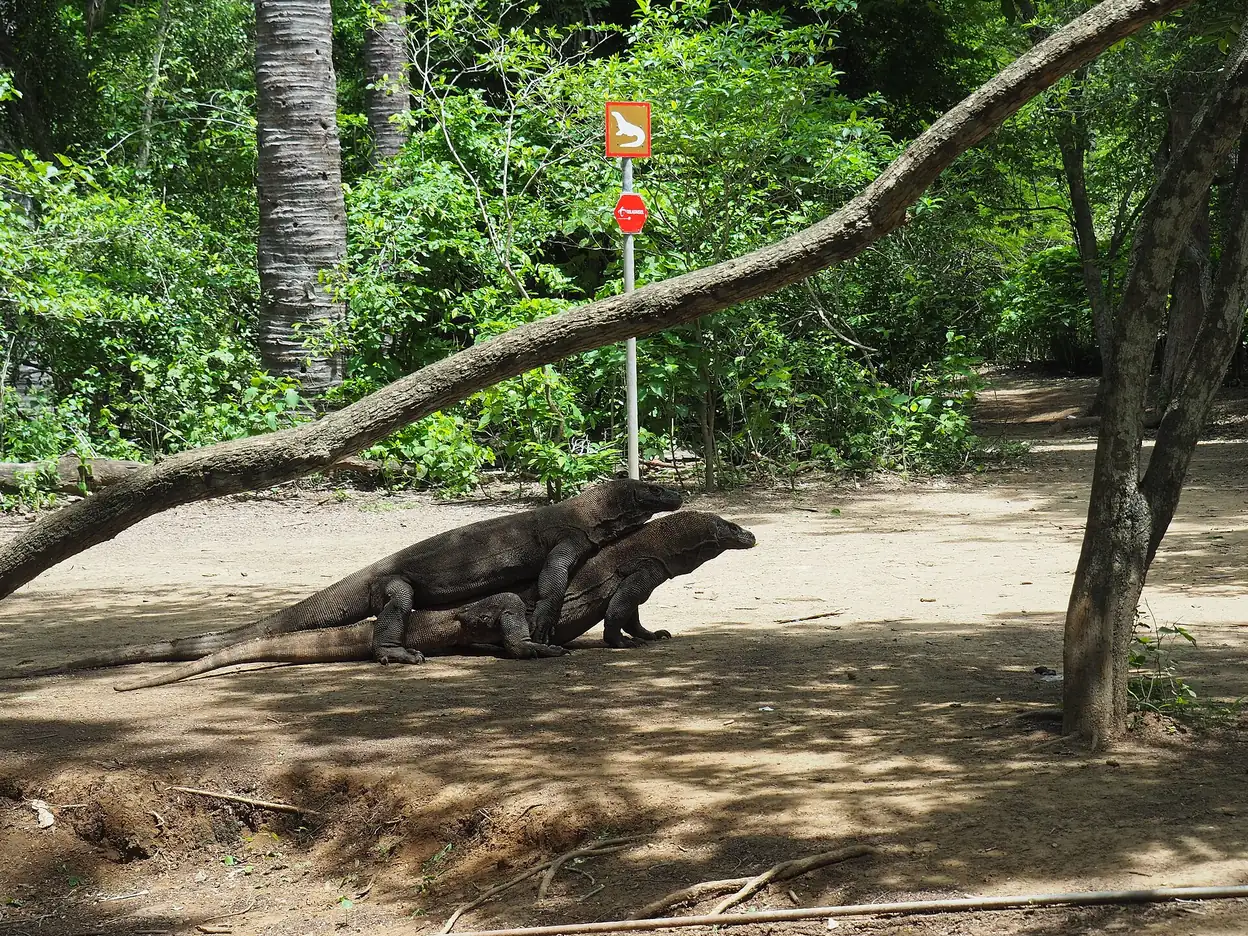
Komodo National Park rules come mainly from the park authority's visitor protocol. It bans touching or crowding animals, feeding wildlife, leaving set routes, trekking outside timed entry, ignoring officers and flying drones without authorisation. Light breaches bring a written warning and heavy ones a six-month blacklist. The protocol gives no minimum distance in metres, so the officer on duty decides what counts as too close.
What do the Komodo National Park rules prohibit?
The list below is a plain-English reading of the park authority's published visitor protocol, the text that sets out the visitor rules. It is a guide to that text and has no legal standing, so the park's original wording governs. We have grouped the prohibitions by what they touch, because the question most visitors have is "what does this mean for me on the trail?"
| Type of rule | What the protocol prohibits | Detail to keep in mind |
|---|---|---|
| Wildlife | Touching animals, or getting too close to them, whether ashore or in the water | No distance in metres is given |
| Wildlife | Feeding wildlife | Applies to all wildlife, so dragons are included |
| Wildlife and land | Taking sand, coral, plants or animals without written permission | Written permission is the only stated exception |
| Land | Trekking off the set routes or zones | The wording covers routes and zones alike |
| Land | Trekking outside the timed entry in force | Ask what the entry time is on your date |
| Land | Fires, careless cigarette disposal, beach dinners and barbecues | The wording targets careless disposal of cigarettes |
| Conduct | Disregarding what a park officer or the duty naturalist guide tells you on a trekking route | Instructions are binding |
| Conduct | Litter of any kind; loud music in visitor sites and wildlife areas | Covers visitor sites and wildlife areas alike |
| Conduct | Firearms and fireworks | Listed with the fire rules |
| Entry | Entering without buying the state ticket | See the tariff notice |
| Air | Flying drones without authorisation | The official term for small drones is PUKTA |
The grouping is ours, and the protocol's prohibitions extend beyond a dragon visit. Anyone also snorkelling or sailing should read the original page in full.
Which rules matter most on a dragon walk?
This is our reading, since the protocol does not rank its own rules. Four of them shape a dragon walk more than the others.
- Do not touch animals or get too close. The rule is worded only as "too close", with no number. Operators quote their own figures, and the page on how close you can get sets out that disagreement. None of those numbers carries the protocol's authority.
- Follow the officer or guide. Because the protocol gives no distance, this rule fills the gap: when the person on duty says move back, that instruction binds you. What these people do on a walk, and what is reported about whether one is required, is covered under Komodo National Park rangers.
- Stay on the set routes. The protocol prohibits trekking off set routes or zones.
- Feed nothing. Wildlife feeding is banned outright, which also rules out tempting an animal into a photograph.
Some common questions have narrower answers than people expect. The wording names litter of any kind and careless cigarette disposal. Ask the officer how it applies to food scraps or smoking. The published protocol contains no menstruation rule, although that absence does not prove rangers never give informal advice on the subject.
Which rules are easiest to break by accident?
Few visitors plan to touch a dragon. These are the breaches that can happen in the course of a pleasant day, which is why we single them out:
- A beach dinner or barbecue. The protocol prohibits both, so raise it if a day on the water includes food on the sand.
- A speaker on the beach. Loud music is prohibited in visitor sites and wildlife areas.
- A souvenir. Sand, coral and plants are all covered, and written permission is the only stated route.
- A short cut. The protocol does not say how its route rule applies to a detour for shade or a view. Ask the officer.
- A late arrival. Trekking outside your timed entry is its own prohibition. Ask what happens if your boat is late.
What happens if you break a rule?
The protocol sets out penalties for visitors in two tiers, with extra steps for foreigners and for drones.
| Trigger | Consequence stated by the protocol |
|---|---|
| Light violation by a visitor | Written warning |
| Three light violations | Counted as a heavy violation |
| Heavy violation by a visitor | Six-month blacklist from the park, and possibly from other Indonesian conservation areas |
| Dangerous or unlawful conduct by a foreign visitor | Possible referral to immigration officers in Labuan Bajo |
| Unauthorised drone flight | Pilot can be told to stop and delete the footage |
We have not sorted individual acts into light and heavy here. If it matters to you how a specific act is classed, ask the park office, and do not rely on anyone's guess, including ours. No fine is quoted on this page, because the sanctions summarised above do not state one. The three-strike line deserves attention, because a blacklist may reach other conservation areas as well. The protocol gives no time period for the three light violations, so ask the park office.
Can you feed Komodo dragons? No. Is it illegal, in the sense of a crime? We can confirm that it is banned by the protocol and carries the sanctions above. Any statute behind the protocol is a question for the park office or a lawyer.
What are the rules on drones and filming?
Flying a drone without authorisation is prohibited. The official term for small drones is PUKTA, in case you see it on paperwork. The park's drone procedure asks for all of the following:
- a request letter
- a flight plan
- a safety assessment
- registration of the unit
- a pilot licence
- a flight permit
- insurance
The official drone charge in the price table on this page sits on top of that paperwork and does not replace it. Filming has its own route. The park's SIMAKSI page names commercial, non-commercial and documentary filming among activities that need this official entry permit. Practical advice for people with cameras is on the page about photographing Komodo dragons.
What about tickets and timed entry?
You need the state ticket to enter, and the official tariff notice states that a ticket, once bought, can be neither cancelled nor refunded. Its published entry rates are in the price table on this page. One travel site, GoBajo, says an e-ticket is valid only for its printed date. No source sets a booking order, so ask how entry and boat are tied together before you pay for either.
Timed entry sits alongside the visitor quota. The ministry set a daily quota of 1,000 people from 1 April 2026, and Antara reported a plan, stated in 2025, to split it at first into three sessions of 300 to 330 people. That is a reported plan, so ask which sessions apply now. The SiOra mobile application, the Jakarta Globe reported, was to run the quota by handling visitor registration and distribution. The visitor limit page has more on how the cap works.
What should your group check before the walk?
- Everyone has a state ticket for the correct date, and knows it cannot be refunded.
- You know your entry time, and your boat plan gets you there within it.
- Nobody leaves litter of any kind, and anyone unsure about food scraps has asked the officer.
- Any drone stays packed unless every document on the list is in hand.
- Anyone filming has asked the park whether SIMAKSI applies.
- Everyone understands that "too close" is decided by the officer or guide on duty, on the spot.
What else do visitors ask about the rules?
What ethical rules apply to wild Komodo dragon viewing?
The protocol sets the floor: no touching or crowding animals, no feeding, stay on set routes, no loud music in wildlife areas, and follow the officer or guide on duty. It does not publish a separate ethics code for dragons.
Is feeding Komodo dragons illegal?
Feeding wildlife is banned under the visitor protocol, and breaches can bring a written warning or a six-month blacklist. Whether a separate criminal law also applies is a question for the park office.
Can drones be used near Komodo dragons?
Only with authorisation. The park requires a set of documents including a flight plan, safety assessment, pilot licence and insurance, and an unauthorised pilot can be told to stop and delete the footage.
What permits are needed to see wild Komodo dragons?
For an ordinary visit the protocol requires the state ticket and adherence to timed entry. SIMAKSI, the official entry permit, is named for activities such as filming. Check with the park office if your plans go beyond a standard visit.
Can you be banned from Komodo National Park?
Yes. The protocol's blacklist runs for six months after a heavy violation and may extend to other Indonesian conservation areas. Three light violations add up to one heavy violation.
Which published prices did we check?
Official fees and public third-party listings, each with its source and the month we checked it. These are not our prices or offers. Fees change and sources sometimes disagree, so check the source before you rely on a figure.
| Item | Published price | Source | Checked |
|---|---|---|---|
| Komodo National Park entry, foreign visitor, per person per day (official tariff notice under Government Regulation 36 of 2024; listed under weekdays and Saturday) | IDR 250,000 | tnkomodo.ksdae.kehutanan.go.id | Nov 2026 |
| Komodo National Park entry, Indonesian visitor, per person per day, weekdays and Saturday (official tariff notice) | IDR 50,000 | tnkomodo.ksdae.kehutanan.go.id | Nov 2026 |
| Komodo National Park entry, Indonesian visitor, per person per day, Sundays and national holidays (official tariff notice) | IDR 75,000 | tnkomodo.ksdae.kehutanan.go.id | Nov 2026 |
| Drone operation charge, per unit per day (official tariff notice; permit still required) | IDR 2,000,000 | tnkomodo.ksdae.kehutanan.go.id | Nov 2026 |
Which sources support this page?
- Komodo National Park: visitor protocol
- Komodo National Park authority: drone flight permit
- Komodo National Park authority: SIMAKSI entry permit
- Komodo National Park authority: tariff notice
- Indonesian forestry ministry: visitor quota release
- Antara: government to limit visitors
- Jakarta Globe: visitor cap and SiOra
- GoBajo: Komodo National Park
How do I reach the desk?
The desk is separate from the park office and cannot issue tickets, permits or rulings. It can answer questions about a planned visit. Because a request through the desk can end in a paid booking, we have a commercial stake in your decision. Reach it on WhatsApp +62 811-3823-875, or email the desk.
Send the desk your dates and where you are coming from. The desk replies in writing.
Ask the desk on WhatsApp sales@komodoluxury.com