On this page
- How many Komodo dragons are left, by each count?
- Why do counts differ so much?
- Why are Komodo dragons listed as Endangered?
- Is the Komodo dragon population falling?
- Which figure should you quote for which question?
- Do these numbers tell you how many you might see on one visit?
- What else do people ask about dragon numbers?
- Which sources support this page?
- How do I reach the desk?
By See Komodo Dragons Editorial Desk
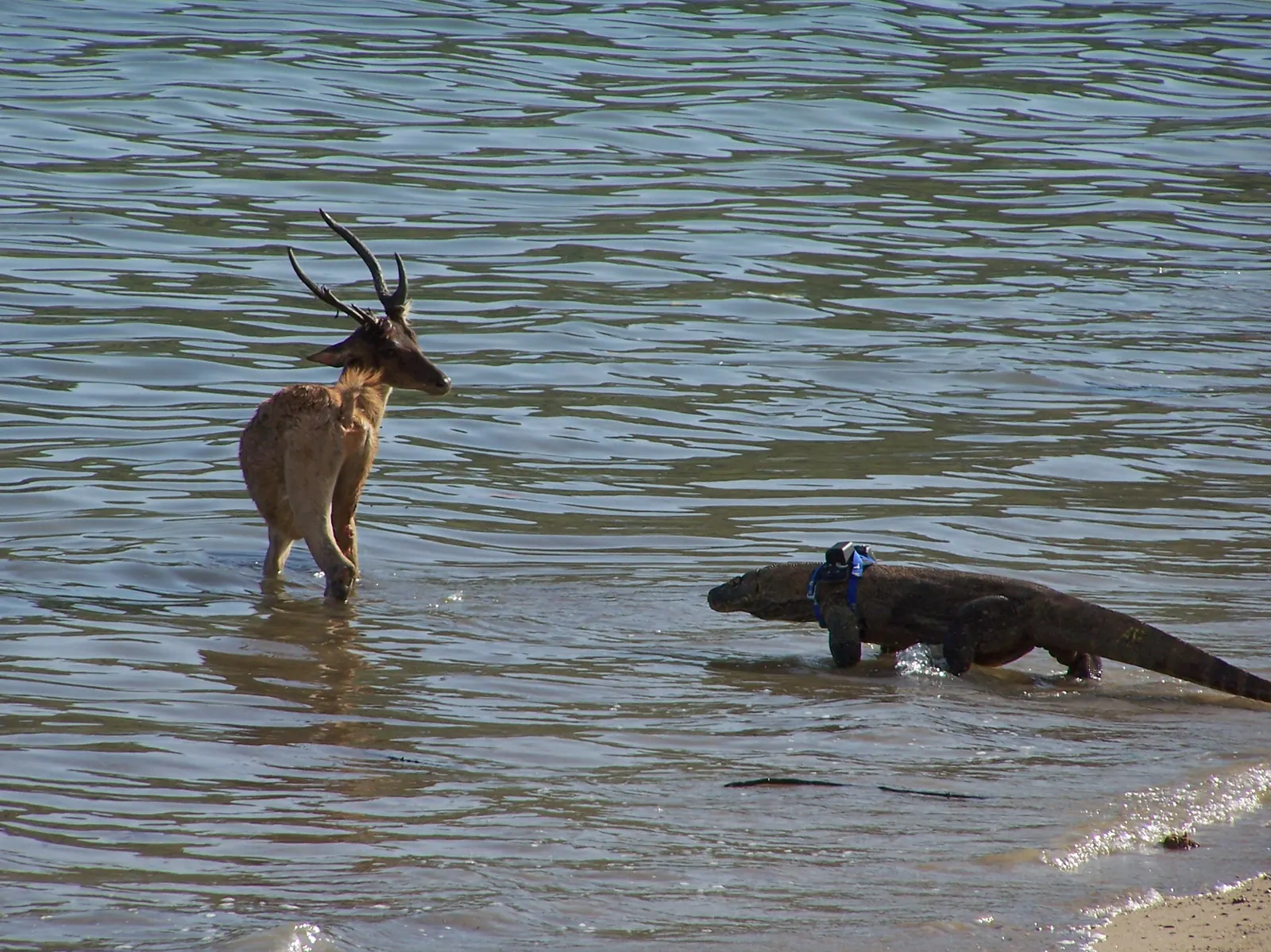
Nobody can give one figure for how many Komodo dragons are left. The park authority's latest count is about 3,156 inside the park in 2022, while the IUCN Red List records 1,383 mature individuals. Those numbers measure different things, so both can stand, and they should not be added together or averaged.
How many Komodo dragons are left, by each count?
Below is every figure we can attribute, with its year, its source and what it claims to measure. Read the last column first: it explains most of the gap between the numbers.
| Figure | Year | Source | What it counts |
|---|---|---|---|
| About 3,156 | 2022 | Park authority monitoring | Inside the park only; adults and young; Flores excluded |
| About 3,300 | 2022 | BBC, citing Reuters | Dragons in Indonesia, as reported |
| About 3,500 | As of 2021 | San Diego Zoo Wildlife Alliance | Adults and juveniles |
| 1,383 | Assessed 2019, published 2021 | IUCN Red List | Mature individuals only |
| Fewer than 1,400 | 2025 report | IUCN World Heritage Outlook | Adults, as the basis of the listing |
| About 5,700 | Older, still published | UNESCO listing text | Individuals; do not read as current |
| 2,500 | 2015 | Mongabay | Inside the park |
The latest official park number on this page is from 2022, so anything you read for 2025 or 2026 needs its own source. UNESCO's number is older and still online, so do not read it as current.
Why do counts differ so much?
Ask how many Komodo dragons there are and the answer depends on three separate questions.
- Which animals? A count of mature dragons leaves out juveniles and young adults. The Red List's 1,383 and the park's 3,156 are therefore not rivals: the first is a subset of the kind of animal the second is counting, and it also has a different scope.
- Which place? The park authority's figure stops at the park boundary. Flores lies outside it. San Diego Zoo Wildlife Alliance describes eight subpopulations across six islands, one of which is Flores, while the Red List records eight locations in the Lesser Sunda Islands.
- Which year? The dated figures in the table run from 2015 to a 2025 report, and UNESCO's carries no clear date at all.
Published numbers are estimates and monitoring results, and the sources behind this page do not all explain how theirs were produced. So a comparison between any two rows should come with caution, even where the years match. The BBC's 3,300 and the park's 3,156 are both for 2022, and the gap may simply reflect scope, since one is a press figure for Indonesia and the other an official figure for the park.
A tempting shortcut is to quote a range such as "between X and Y dragons" by taking the highest and lowest numbers above. That would imply a single study found both ends. None did. Subtraction is just as unsafe. Taking the BBC's 3,300, removing the park's 3,156 and calling the remainder the Flores population would mix a press figure with an official monitoring result that were never presented as parts of one sum. None of the figures above is a separate total for Flores.
As for the Komodo dragon population by island, an official breakdown is not something we can point to. The BBC described Komodo Island in October 2020 as home to most of the lizards and Rinca as home to the second-largest population, without a head count in that line. A Forbes contributor said in 2024 that the largest population lives on Rinca, also without a count. Wikipedia offers about 100 for Gili Motang. Wikivoyage claims there are more dragons on Flores than on Komodo itself, which conflicts with the BBC's line, so treat that as one guide's claim and do not repeat it as fact. Our guide to where to see Komodo dragons compares the islands themselves.
Why are Komodo dragons listed as Endangered?
A low number of adults, split into small groups. The species' conservation status on the IUCN Red List is Endangered, assessed on 5 August 2019 and published in 2021. The IUCN World Heritage Outlook explains the basis in plain terms: fewer than 1,400 adults, no subpopulation above 500, and climate modelling that suggests a possible decline. The Red List also records severe fragmentation.
Notice what that reasoning rests on: the size of the population, how it is split, and a modelled future risk. A measured collapse today is not part of the Outlook's explanation. That is how the listing can sit beside monitoring results that look steady on the two main islands. The cap of 500 may be the most telling figure on the page, because a species can total thousands of animals and still have every group small.
Is the Komodo dragon population falling?
Sources give different answers, and the Red List entry itself shows two labels. It gives the current population trend as stable while also recording a continuing decline of mature individuals. We are not going to resolve that for you, because the entry does not. Anyone who tells you the species is simply stable, or simply declining, is quoting half of the page.
| Position | Source | Wording in short |
|---|---|---|
| Stable | IUCN Red List, trend field | Current population trend: stable |
| Declining | IUCN Red List, mature individuals field | Continuing decline recorded |
| Stable | IUCN World Heritage Outlook | Status stable since 2018, with monitoring and patrolling in place |
| No decline in occupancy | IUCN World Heritage Outlook | Long-term monitoring on Komodo and Rinca has not recorded declines in occupancy |
| Fallen | San Diego Zoo Wildlife Alliance | From 5,000 to 3,500 between 1981 and 2021 |
Two of those rows concern different windows. The zoo's statement runs across 40 years, and the Outlook's stable reading starts in 2018, so a long fall and a recent plateau could both be true, although the sources do not say that is what happened. Occupancy is another distinct measure. It tracks whether dragons are present across sites, which does not tell you how many are there, and it only covers Komodo and Rinca. Smaller islands and Flores could tell a different story.
The 2015 Mongabay figure of 2,500 and the 2022 park figure of about 3,156 might look like growth. They may come from different methods, so they show no trend. Whether visitors affect these numbers is a separate debate, taken up on our page asking whether tourism harms Komodo dragons.
Which figure should you quote for which question?
Match the number to the question being asked, and keep the source and scope attached to it. If you want one sentence for your own use, the most defensible is the first row of this table, written out in full: about 3,156 dragons in the park in 2022, according to the park authority.
| Question | Figure | Say this with it |
|---|---|---|
| How many live inside the park? | About 3,156 | 2022, park authority; adults and young; Flores excluded |
| How many mature animals are there? | 1,383 | IUCN Red List; mature individuals only |
| What is the conservation status? | Endangered | IUCN Red List; assessed 5 August 2019, published 2021 |
| How big is the largest group? | None above 500 | IUCN World Heritage Outlook, 2025 report |
Two rows from the first table work only as history. UNESCO's 5,700 should not stand in for a current count, and Mongabay's 2,500 belongs to 2015. Quote them with their age or leave them out.
Do these numbers tell you how many you might see on one visit?
No. A count for a whole park says nothing about how many animals are near one trail on one morning, and we know of no sighting rates that could fill that gap. These figures describe the standing of the species. If an article or an itinerary uses population numbers to suggest a sighting is assured, treat it as sales language. A more useful question to ask is how a visit is run, given that the animal you are going to see is listed as Endangered.
What else do people ask about dragon numbers?
Are Komodo dragons endangered in their natural habitat?
Yes. The IUCN Red List classes the species as Endangered, assessed in August 2019 and published in 2021. The IUCN World Heritage Outlook ties that to fewer than 1,400 adults and no subpopulation above 500.
Are wild Komodo dragon populations increasing?
No report points to an increase. The Outlook describes status as stable since 2018, the Red List shows both a stable trend and a continuing decline of mature animals, and San Diego reports a long fall since 1981.
Which island has the largest Komodo dragon population?
The BBC described Komodo Island in 2020 as home to most of the lizards, with Rinca second. A Forbes contributor said in 2024 that the largest population lives on Rinca. Neither gives a count, so treat both as press description and not as a census.
How many adult Komodo dragons are left?
The IUCN Red List records 1,383 mature individuals, and the IUCN World Heritage Outlook says fewer than 1,400 adults. Totals in the thousands include younger animals, so they should not be compared directly with these figures.
Which sources support this page?
- Komodo National Park authority: fauna page
- BBC: ticket hike and strike, August 2022
- San Diego Zoo Wildlife Alliance: Komodo dragon
- IUCN Red List: Komodo dragon
- IUCN World Heritage Outlook 2025
- UNESCO World Heritage Centre: Komodo National Park
- Mongabay, December 2015
- BBC News, October 2020
- Wikipedia: Gili Motang
- Wikivoyage: Komodo National Park
- Forbes contributor: how and where to see Komodo dragons, 2024
How do I reach the desk?
If you spot a newer official count, send it to us on WhatsApp at +62 811-3823-875 or by email to the desk. Travel questions go to the same desk. Those can end in a paid booking, which is our commercial interest, and only a written offer commits anyone.
Send the desk your dates and where you are coming from. The desk replies in writing.
Ask the desk on WhatsApp sales@komodoluxury.com