On this page
- Where does the warning come from?
- What does science say about their sense of smell?
- Is there a study on Komodo dragons and menstruation?
- What does the official visitor protocol say?
- What is a sensible approach?
- What else do visitors ask about periods and dragon walks?
- Which sources support this page?
- How do I reach the desk?
By See Komodo Dragons Editorial Desk
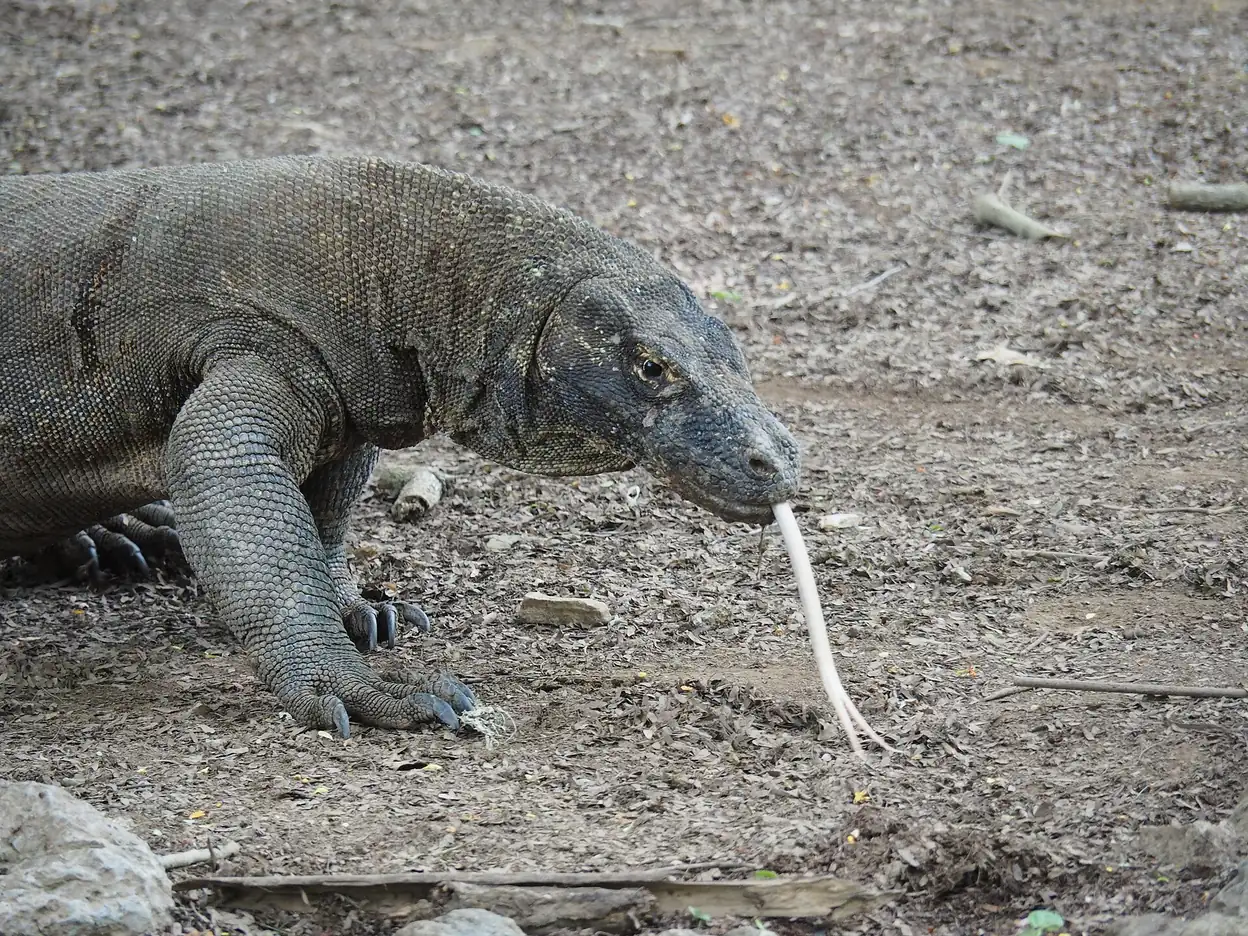
Warnings linking Komodo dragons and menstruation come from an operator, travel blogs and an essay. We found no peer-reviewed study either way, and the park's published visitor protocol contains no menstruation rule. Smithsonian's National Zoo documents smell for carrion only. This page therefore calls a visit neither safe nor dangerous, and suggests a private word with your ranger before the walk.
Where does the warning come from?
If you have your period on the date of your trip, or might, you have probably met this warning already. It helps to see how little agreement sits behind it. Here are the sources we can trace, with what each one actually offers:
| Source | What kind of source | What it says | What supports it |
|---|---|---|---|
| Green Rinjani | Trekking operator | Menstruating visitors should inform their ranger before the walk | No study cited |
| Miss Filatelista | Travel blog | Repeats advice not to go while menstruating; says dragons smell blood up to five miles away | Distance has no source |
| Society for Menstrual Cycle Research | Personal essay, 2013 | Reports a notice saying menstruating women could not step on Komodo, and questions whether such cautions are well founded | No data |
| A 2013 travel blog | Single traveller report | Reports a guide saying women living on Rinca and Komodo stay inside for about a week during their period | Hearsay, not confirmed |
| Smithsonian magazine | Press article | Links to a claim that dragons can smell blood from miles away | Secondary claim |
Read those rows together and two different pieces of advice appear. Green Rinjani asks for something modest: tell the ranger. Miss Filatelista goes further and repeats advice not to go at all. Those lead to very different decisions, and neither cites evidence for its position.
The 2013 essay for the Society for Menstrual Cycle Research is the most sceptical of the group. Its writer reported seeing a notice and asked whether such cautions were well founded. It is one person's account from over a decade ago, and it offers no data in either direction.
The 2013 travel blog needs particular care. It relays what one guide told one traveller about women who live on the islands. We do not repeat that as a fact about residents. A remark passed through two people is weak grounds for describing a community's lives.
What does science say about their sense of smell?
The documented part is real but narrow. Smithsonian's National Zoo says dragons can smell carrion up to 4 km away. That is a statement about carcasses, and the zoo's page offers no data on any response to menstruation.
The figures in circulation show how a claim can grow as it travels. A zoo reports up to 4 km for carrion. A travel blog says five miles for blood, with no source. Smithsonian magazine links to a claim about blood from "miles" away. Those lines look as if they support one another, yet they differ on the substance being smelled, on the distance and on the quality of the evidence behind them.
Two wrong conclusions are available here, and we would avoid both. One is that a strong sense of smell for carrion proves menstruating visitors attract dragons. The other is that the lack of a measured response proves they do not. Sources on carrion answer neither question, and the same goes for how dragons respond to blood from a cut or graze.
Is there a study on Komodo dragons and menstruation?
Not one we could find, in either direction. That gap is the most important fact on this page, and it should be read carefully. It does not show the warnings are false, and it does not show they are true. It means we know of no evidence for either position, including from the people who state theirs most confidently.
Useful evidence would need to record how dragons behave around people in a way that separates this from everything else going on during a walk, such as group size, distance and the animal's own condition. A single reported incident or a single calm walk would tell you very little, and so we do not offer either as reassurance or as alarm.
What does the official visitor protocol say?
Nothing on the subject. The visitor protocol published by the park authority does not contain a menstruation rule. It is a long list of prohibitions, set out in our reading of the park's visitor rules, and this is not among them.
Absence from one published page has limits. It does not prove that no ranger or local guide will ever offer informal advice, and the reports above suggest some have. It also does not make that advice wrong. It does tell you what you can reasonably say if someone presents a ban as official: you can ask them where it is written, while still following any instruction they give you on site.
What is a sensible approach?
Should women avoid Komodo Island during menstruation? That decision belongs to each visitor, and neither we nor a blog can make it for you. If you want a practical sequence, this one fits the evidence as it stands:
- Speak to the ranger before the walk. Do it privately if you prefer. This is the one concrete step any source here proposes, and it costs little. You need only say enough for them to answer you.
- Ask open questions. Does this change where I should walk in the group? Is there a route you would suggest today? What would you want me to do differently?
- Follow what you are told. Rangers are on the ground and you are not in a position to overrule them, whatever a web page says. The page on rangers explains their role on a walk.
- Keep your own limit. Whether you walk is your decision, and you owe no one an explanation.
- Ignore the distance figures. Neither four kilometres nor five miles tells you anything useful about your situation.
Plan for the awkward case before you pay, if you can. Ask whoever is running your day what happens if a ranger advises you against a walk, or if you decide on the jetty that you would rather not go. Does the boat wait? Is there somewhere comfortable to stay? Does the rest of the group carry on? Those answers are about logistics, and they are far easier to get calmly in advance than at a landing site in front of other people.
The general behaviour expected of every visitor still applies to you on every date, and it is set out under Komodo dragon safety. If you have a health question about your own circumstances, a doctor is the right person to ask. Nothing here is medical advice.
What else do visitors ask about periods and dragon walks?
Can Komodo dragons smell menstrual blood?
No peer-reviewed study we know of answers this either way. Smithsonian's National Zoo documents an ability to smell carrion, and that finding does not extend to menstrual blood on its own.
Does blood attract Komodo dragons?
Claims that dragons detect blood from miles away circulate in blogs and press links, without a measured figure behind them. The documented figure, from a zoo, concerns carrion.
Can you see Komodo dragons on your period?
The park's published visitor protocol has no rule against it. Whether it changes your risk is unknown, so we call it neither safe nor dangerous. Talk to your ranger before the walk and follow their instructions.
Should I tell the ranger that I have my period?
One trekking operator, Green Rinjani, asks menstruating visitors to do so. It lets the person responsible for the walk give you advice directly.
Which sources support this page?
- Green Rinjani (trekking operator): safety information
- Miss Filatelista (travel blog): Komodo Island
- Society for Menstrual Cycle Research: 2013 essay
- Travel blog, March 2013: Komodo dragons and menstruation
- Smithsonian's National Zoo: Komodo dragon
- Smithsonian magazine: Komodo dragon encounters
- Komodo National Park: visitor protocol
How do I reach the desk?
You can ask the desk about this page without sharing personal detail. It cannot speak for rangers or give medical advice. We should add that desk requests can lead to paid bookings, so we have a commercial interest. Use WhatsApp +62 811-3823-875 or email the desk.
Send the desk your dates and where you are coming from. The desk replies in writing.
Ask the desk on WhatsApp sales@komodoluxury.com