On this page
- How fast can Komodo dragons run on land?
- Do dragons really run at double human speed?
- How should you read speed claims online?
- Can they swim and climb?
- How well do they see and hear?
- How strong is their sense of smell?
- What does this mean on a walk?
- What else do people ask about dragon speed and senses?
- Which sources support this page?
- How do I reach the desk?
By See Komodo Dragons Editorial Desk
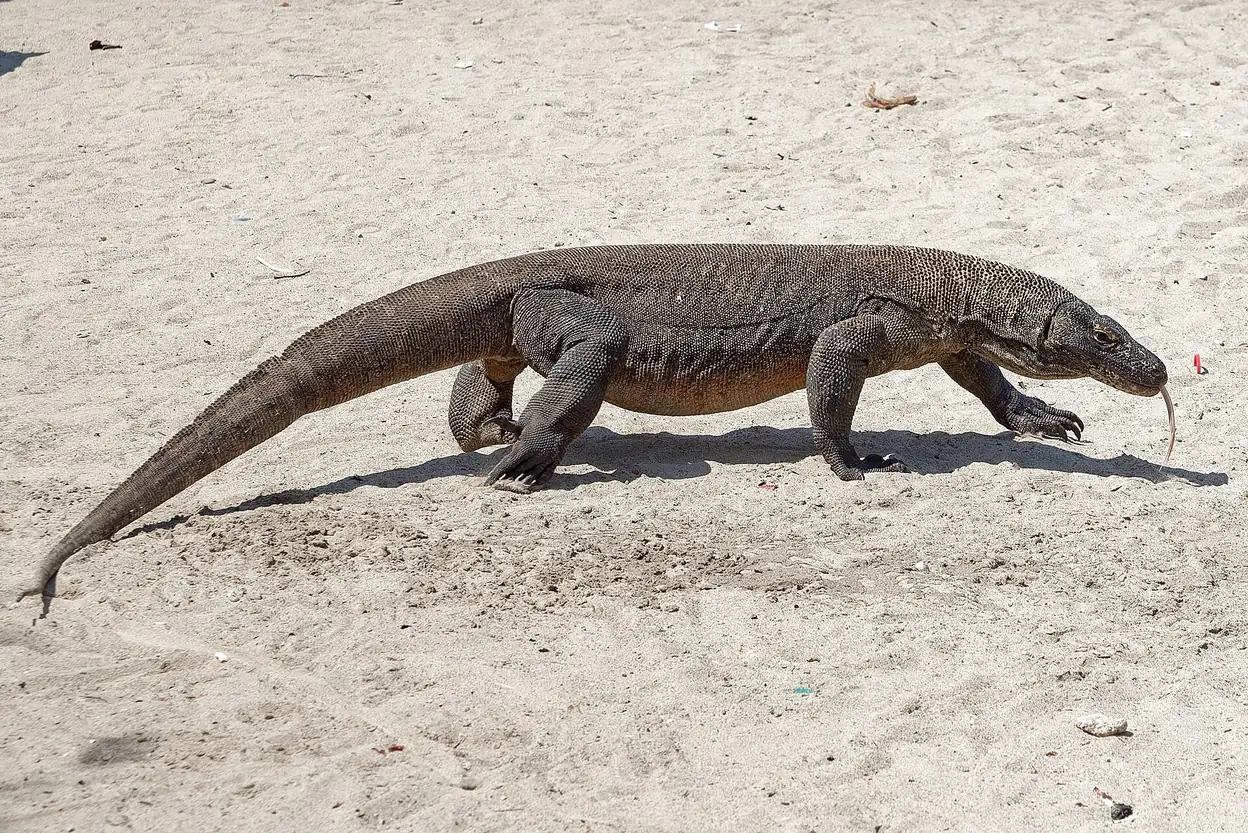
How fast can Komodo dragons run? Smithsonian's National Zoo says they can briefly reach 16 to 20 km/h, and Wikipedia gives brief sprints of up to 20 km/h. Those are short bursts by an animal that mostly waits in ambush. A cruise operator's claim of double human speed has no support in those figures. On a walk, follow your ranger instead of relying on any number.
How fast can Komodo dragons run on land?
The two figures we trust on Komodo dragon speed agree closely. Smithsonian's National Zoo puts a brief top speed at 16 to 20 km/h, or roughly 10 to 12 mph. Wikipedia gives brief sprints up to 20 km/h. The word to hold on to in both is "brief". Neither source gives a figure for how long a dragon can keep that up, how far it can run, or how terrain affects it.
Speed is also not how a dragon usually hunts. The National Zoo says dragons wait along game trails, and that most hunting attempts fail. So the picture is of an ambush animal capable of a sudden burst, which is quite different from one that runs prey down over distance.
| Ability | Figure or finding | Source | Limit of the claim |
|---|---|---|---|
| Running | 16 to 20 km/h, briefly | Smithsonian's National Zoo | Short bursts only |
| Running | Sprints of up to 20 km/h | Wikipedia | Encyclopedia summary |
| Diving | Up to 4.5 m | Wikipedia | Depth, with no speed attached |
| Climbing | Young dragons live in trees until about four years old and 1.2 m long | San Diego Zoo Wildlife Alliance | Describes young animals |
| Smell | Carrion up to 4 km away | Smithsonian's National Zoo | Carrion specifically |
| Sight | Up to about 300 m; picks up movement better than stationary objects | Smithsonian's National Zoo | Retinas have only cones, so vision is poor in dim light |
| Hearing | Much smaller range than humans | Smithsonian's National Zoo | Cannot hear low-pitched voices or high-pitched screams |
Do dragons really run at double human speed?
Aqua Expeditions, a cruise operator, claims dragons run at double human speed and swim twice as fast. We quote it only to correct it. Neither the zoo nor the encyclopedia figures support a claim like this. It also has no baseline, since "human speed" could mean anything from a stroll to an elite sprinter. A statement that vague is hard to test.
Correcting an exaggeration doesn't make the animal slow. Both supported figures are well above a walking pace, and you would be on rough, hot ground in a group. Can you outrun a Komodo dragon on foot? This guide won't answer that, because no source on this page has tested it and the answer would not change what you should do.
How should you read speed claims online?
Dragon speed attracts dramatic writing, so a few quick tests help when you meet a new figure.
- Does it name a unit and a duration? The zoo's figure has both a range and the word "briefly". A comparison with "a human" has neither.
- Who published it? A zoo or an encyclopedia has little reason to oversell. A company selling trips to see the animal has some.
- Does it change your plans? A ranger's instruction is the same whether the true figure is 16 km/h or 20 km/h, so the argument matters less than it appears to.
Can they swim and climb?
Wikipedia reports diving up to 4.5 m. Apart from the operator claim above, the sources give no swimming speed or distance. Nor can we tell you how likely you are to see one in the water. We know of no sighting data of that kind, so please treat any promise of swimming dragons with caution.
Climbing depends on age. San Diego Zoo Wildlife Alliance says a dragon stays in the trees until it reaches about four years of age and 1.2 m in length, and Wikipedia describes young dragons as proficient climbers. What adults can do in a tree goes unreported.
How well do they see and hear?
Better at distance than you might assume, and worse in poor light. The National Zoo gives a sight range of about 300 m, with moving things easier to detect than still ones. It also says their retinas have only cones, which makes their vision poor in dim light.
Hearing is the weakest of the senses described. The zoo describes a range of hearing far narrower than ours, to the point that low-pitched voices and high-pitched screams both go unheard. So can a dragon hear visitors approaching? The zoo gives hearing range only and says nothing about how a dragon reacts to a walking group.
How strong is their sense of smell?
This is the sense with the headline figure, which the National Zoo puts at up to 4 km for carrion. It should not be stretched to anything else. You will see larger numbers online for other substances, and the page on Komodo dragons and menstruation shows how one of those claims holds up against the evidence.
The zoo's figure covers carrion, so it says nothing about smelling a person.
What does this mean on a walk?
Each finding describes the animal, and none of them is a measure of your risk. Here is how they read for someone on a trail:
- Stillness is normal. An animal that waits along trails can look idle or asleep. A motionless dragon is not a harmless one.
- Bursts are brief. The zoo gives a top speed for a short burst, and no source tests one on a trail.
- Movement stands out. Smithsonian's National Zoo says a dragon picks up motion better than stationary objects. The ranger decides how your group moves near one.
- Hearing is narrow. The zoo reports what a dragon cannot hear, and it does not report what a dragon notices.
None of this is a set of tactics for an encounter. Green Rinjani, a trekking operator, says to follow the ranger if a dragon moves toward the group. Behaviour on the walk is covered under Komodo dragon safety, and questions on the day belong with the ranger beside you.
What else do people ask about dragon speed and senses?
Can Komodo dragons run faster than humans?
Sources give brief bursts of 16 to 20 km/h, with no published comparison to people on a trail. The zoo reports a brief burst, and it says nothing about a chase. Follow the ranger rather than planning to run.
Can Komodo dragons hear visitors approaching?
Smithsonian's National Zoo says their hearing range is much smaller than ours and that they cannot hear low-pitched voices or high-pitched screams. The zoo gives hearing range only.
Can I see Komodo dragons swimming?
The sources do not describe visitors seeing one swim. Wikipedia gives a diving depth of up to 4.5 m. Be sceptical of any offer that promises a swimming dragon.
Can Komodo dragons climb trees?
Young ones can. San Diego Zoo Wildlife Alliance says they stay in trees up to about four years of age and a length of 1.2 m. The adult record is silent on trees.
Which sources support this page?
- Smithsonian's National Zoo: Komodo dragon
- Wikipedia: Komodo dragon
- Aqua Expeditions (cruise operator): Rinca Island
- San Diego Zoo Wildlife Alliance: Komodo dragon
How do I reach the desk?
The desk answers practical questions about a planned walk, and it cannot speak for the park or for the rangers on your date. Desk requests can end in paid bookings, so our interest here is partly commercial. Use WhatsApp +62 811-3823-875, or email the desk.
Send the desk your dates and where you are coming from. The desk replies in writing.
Ask the desk on WhatsApp sales@komodoluxury.com