On this page
- How many Komodo dragon attacks have been recorded?
- Who has actually been hurt?
- Have tourists been bitten?
- What do the incidents have in common?
- Are Komodo dragons aggressive?
- Why can a single bite be so serious?
- Why do researchers call them deadly but not dangerous?
- Does a low count mean low risk?
- So are Komodo dragons dangerous to visitors on a guided walk?
- What else do readers ask about attacks?
- Which sources support this page?
- How do I reach the desk?
By See Komodo Dragons Editorial Desk
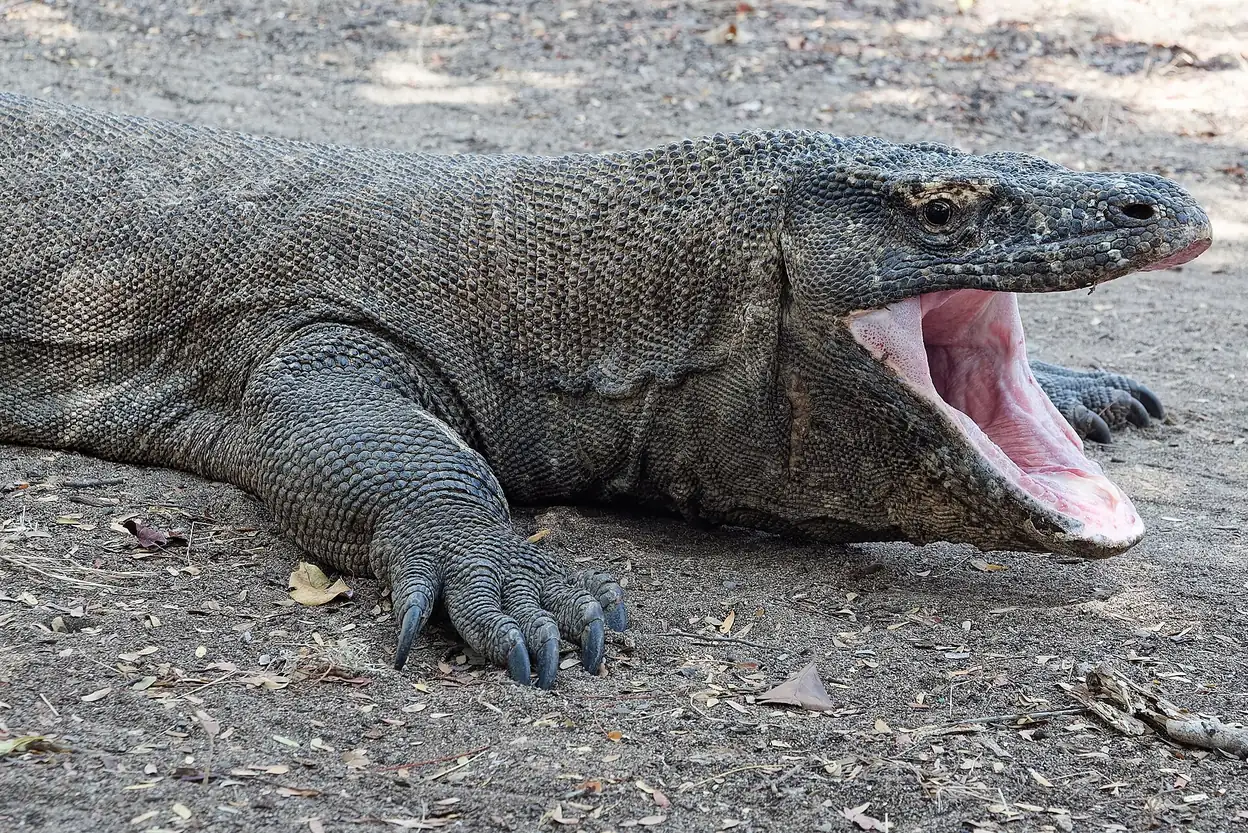
Are Komodo dragons dangerous? Yes. They are large wild carnivores and have killed people, though reported attacks are few. One published count, 24 attacks and five deaths from 1974 to 2012, is secondary and dated. The incidents we can describe mostly involve villagers and staff, and one tourist bitten after ignoring warnings.
How many Komodo dragon attacks have been recorded?
Wikipedia, citing Komodo National Park data, gives 24 reported attacks on humans between 1974 and 2012, five of them fatal. That works out at fewer than one reported attack a year. We can point to no newer official count, and the figure is a secondary citation of park data, so treat it as a rough guide. At least three incidents in the table below, from 2013, 2017 and 2020, fall after its window closes.
Two sources also sit awkwardly together. Smithsonian magazine says the 2007 death on Komodo Island was reported as the first fatal attack on a human in 33 years. That leaves little room for the five deaths in the 1974 to 2012 count, since the reports on this page describe only two deaths in that window, in 2007 and 2009. Neither source explains the gap.
Case reports in the medical literature repeat that bites to humans are rare, and Smithsonian magazine calls attacks exceptionally rare. Both statements describe reported events. Neither one measures how often a person and a dragon meet.
Who has actually been hurt?
Here are the incidents we can date and source. The list is incomplete, because it holds only what reached the press or a journal.
| Date | Where | Who | What was reported | Source |
|---|---|---|---|---|
| 2007 | Komodo Island | Eight-year-old boy | Killed. Reported as the first fatal attack in 33 years. | Smithsonian magazine |
| 2008 | Rinca | Stranded divers | Reported fighting off dragons for two days before rescue. | Smithsonian magazine, citing the Telegraph |
| 2009 | Komodo Island | A man | Died after two dragons attacked him. Accounts disagree on whether he was gathering fruit or trespassing. | Smithsonian magazine |
| 2009 | Office on Rinca | A guide | Treated in Flores, then flown to Bali for treatment and 55 stitches. | Smithsonian magazine |
| February 2013 | An office | A ranger and a colleague | A two-metre dragon walked in and bit both. Both were evacuated to Bali. | The Guardian |
| May 2017 | Komodo National Park | Singaporean tourist | Leg bite while photographing feeding dragons. The park's head said warnings were ignored. | CBS News |
| December 2020 | Rinca | Construction worker | Bitten and taken to hospital by speedboat. | Smithsonian magazine |
A separate 2021 foot and ankle case report describes a zoo keeper with tendon and neurovascular injuries from an attack. We leave it out of the table because it happened in captivity, though it shows what a bite can do to a limb.
December 2020 is the latest date in the table. That makes it the most recent attack we can source, which may not be the most recent to have happened.
Have tourists been bitten?
Yes. The May 2017 case is the one tourist bite in our table. The park's head told reporters the visitor ignored warnings, and Smithsonian magazine adds that the same official placed the visitor outside a sanctioned area without an official guide. The official then urged all tourists to take guides.
Neither of the two deaths we can describe in detail involved a tourist on a guided walk. The boy killed in 2007 and the man killed in 2009 were not visitors on a tour. The source gives no detail on the other three deaths in the 1974 to 2012 count.
What do the incidents have in common?
Read the table by setting and three patterns appear. Each is our reading of a small sample and should not be taken as a finding.
- Daily exposure. Villagers, guides and rangers live or work where dragons roam. Two of the bites happened inside offices.
- People in dragon territory. The IUCN World Heritage Outlook cites a strategic assessment saying that humans entering dragon territory increase the risk of conflict and attacks. The 2020 construction bite and the stranded divers both fit that description.
- Attention slipping. Smithsonian magazine puts most attacks down to a guard losing focus or a villager's bad luck. The 2017 tourist case adds a person who did not heed warnings.
Our page on Komodo dragon safety turns this into conduct on a walk, and our page on how close you can get to Komodo dragons covers the disputed distance figures.
Are Komodo dragons aggressive?
Temperament goes unmeasured in these reports. The park authority calls dragons daytime carnivores and scavengers, and occasionally cannibals. That tells you how the animal feeds. It does not tell you how one will treat a person on a path.
The record points both ways. In 2013 a dragon walked into an office and bit two people at work there. In 2017 the bite came while dragons were feeding and a visitor had ignored warnings. One case involves an animal coming to people, the other a person going close to animals, so neither supports the idea that dragons chase people on sight or the idea that they leave people alone.
Why can a single bite be so serious?
PNAS published a 2009 paper on a venom gland in the lower jaw, whose authors argued that anticoagulant, shock-inducing venom acts together with deep wounds. Several injuries in the table led to transfers: to Bali in 2009 and 2013, and by speedboat to hospital in 2020. We state no hospital capability or transfer time for your date. Our page on the Komodo dragon bite goes further into the case reports. None of this is medical advice. If you are bitten, seek emergency care.
Why do researchers call them deadly but not dangerous?
Ecologist Tim Jessop told National Geographic in 2020 that researchers consider dragons "deadly, but not dangerous". The article also says injuries to tourists are essentially unheard of, and that clause overstates the record: the table on this page lists a tourist bitten in 2017, three years before the article ran. The phrase does not measure your risk on a walk.
Does a low count mean low risk?
A low count does not show low risk, for three reasons.
First, the count has no denominator. We know roughly how many attacks were reported, but we cannot divide that by the number of walks or the number of hours people spent near dragons in those decades. Without that, you cannot work out a rate for a visitor.
Second, the count may be incomplete. It relies on what was reported, and it stops in 2012.
Third, averages hide the size of the harm. A rare event can still end a life, and the injuries reported here include tendon damage and emergency evacuation. Weigh rarity and severity separately when you decide what you are comfortable with, particularly if you are travelling with children.
So are Komodo dragons dangerous to visitors on a guided walk?
They can be. The dated incidents on this page include no visitor death on a guided walk, and the one tourist bite involved a visitor reported to be without an official guide. That is as far as this evidence goes. The park's head urged all tourists to take guides, and rangers themselves have been bitten. We make no promise about your walk, and anyone planning to see Komodo dragons should read an operator's reassurance with the same caution.
What else do readers ask about attacks?
How often do Komodo dragons attack people?
One published figure is 24 reported attacks between 1974 and 2012, per Wikipedia citing park data. That count is secondary and old, and later incidents exist. No current official total or rate per visitor is available.
Are Komodo dragons dangerous to visitors?
Yes, they can be. The dated record shows one tourist bitten, in 2017, and gives no rate per visitor. Staff have also been bitten, including inside offices.
Can habituated Komodo dragons still be dangerous?
Yes. Rangers and guides who work around dragons daily have been bitten, including inside offices.
Have Komodo dragons killed humans?
Yes. Wikipedia cites five deaths among reported attacks from 1974 to 2012. Smithsonian magazine describes two in detail: an eight-year-old boy in 2007 and a man in 2009, both on Komodo Island. Neither was a tourist.
What is the most recent Komodo dragon attack?
The latest dated case on this page is a construction worker bitten on Rinca in December 2020, per Smithsonian magazine. Read this as the latest report on this page.
Which sources support this page?
- Wikipedia: Komodo dragon
- Smithsonian magazine: Komodo dragon encounters
- Journal of Emergency Medicine: leg bite case
- The Guardian: Komodo dragon attack, February 2013
- CBS News: tourist bitten, 2017
- Foot and ankle case report, 2021
- IUCN World Heritage Outlook 2025
- Komodo National Park authority: fauna page
- PNAS, 2009: venom gland paper
- National Geographic: where Komodo dragons really live, 2020
How do I reach the desk?
We have a commercial interest here, because a question to the desk can become a paid booking. Know of a dated incident with a source that this table misses? Send it to the desk and the editors will review it. For trip questions, use the same channels, and see how offers work first. Use WhatsApp (+62 811-3823-875) or email the desk.
Send the desk your dates and where you are coming from. The desk replies in writing.
Ask the desk on WhatsApp sales@komodoluxury.com