On this page
- What did the research find?
- Does tourism harm Komodo dragons or only change how they behave?
- Why are some dragons less wary?
- What do authorities and IUCN say?
- What about development on Rinca?
- What about local livelihoods?
- What can a visitor do?
- What else do readers ask about tourism and dragons?
- Which sources support this page?
- How do I reach the desk?
By See Komodo Dragons Editorial Desk
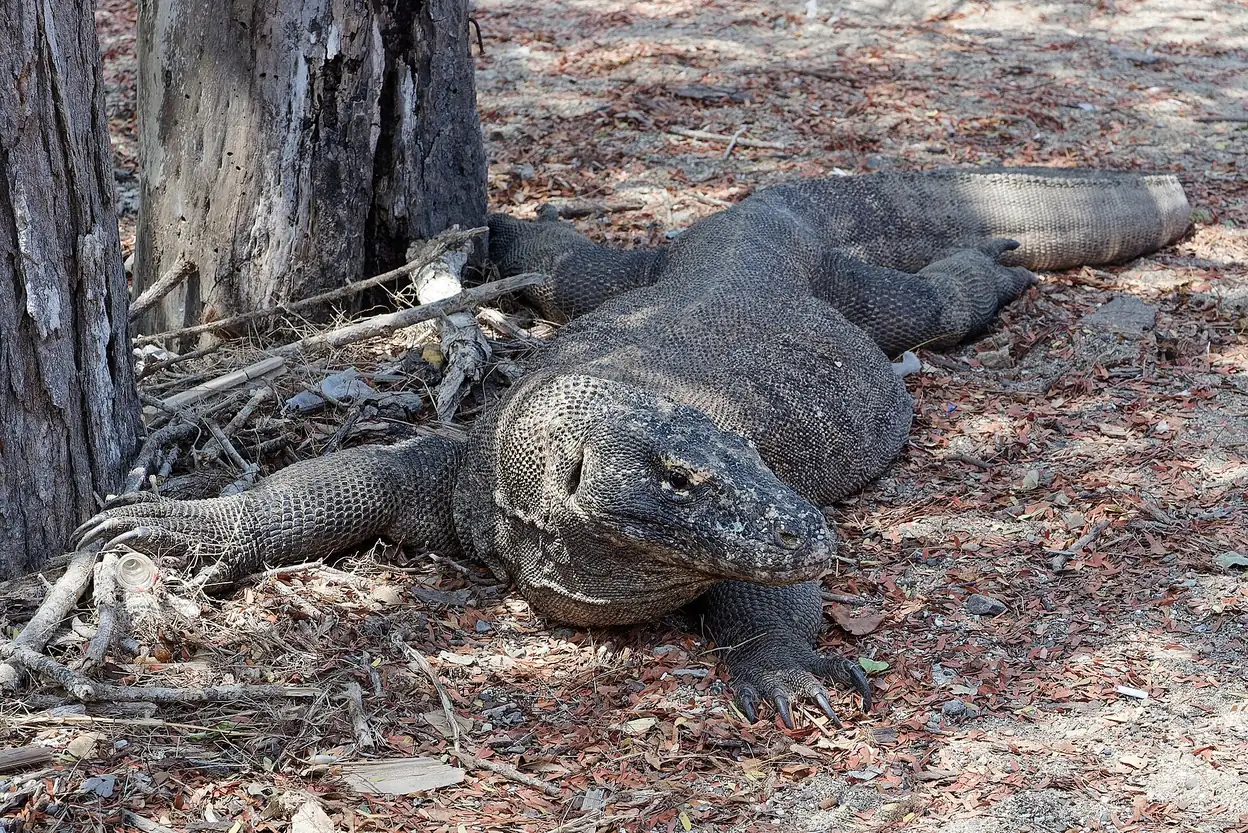
Does tourism harm Komodo dragons? The evidence is mixed. A 2018 study found dragons exposed to ecotourism were less wary and in better condition, linked to feeding and food refuse, while warning of possible harm. IUCN lists tourism among threats, and its Red List entry shows a stable trend alongside a continuing decline of mature animals.
What did the research find?
The most direct evidence is a 2018 study in Biodiversity and Conservation (DOI 10.1007/s10531-018-1601-3), which compared sites on Komodo, including Loh Liang, and on Rinca, including Loh Buaya. It found that dragons exposed to ecotourism showed less wariness, larger body mass, better body condition and higher survival than others. The authors linked these results to feeding and food refuse.
On a narrow reading, that looks like a benefit: heavier animals with higher survival. The same study then cautions against that reading, noting possible negative effects of altered behaviour and adult-biased populations in ecotourism areas. It also cites earlier work finding that tourist-linked feeding in the 1980s and 1990s led to six-fold density increases at feeding sites.
| Evidence | Points toward | Source |
|---|---|---|
| Larger body mass, better condition, higher survival near tourism sites | Possible gain for individual animals | 2018 study |
| Less wariness, altered behaviour, adult-biased populations | Possible harm | 2018 study |
| Six-fold density increases at past feeding sites | Distortion of natural patterns | 2018 study, citing earlier work |
| Tourism and recreation areas named among threats | Harm | IUCN Red List |
| Population stable since 2018, with monitoring and patrols | Stable in the Outlook; the Red List also records a continuing decline, explained under how many Komodo dragons are left | IUCN World Heritage Outlook |
| Economic incentive for local people to support protection | Benefit | Smithsonian's National Zoo |
Does tourism harm Komodo dragons or only change how they behave?
The record does not settle this. It supports a narrower claim: a 2018 study found differences in dragons exposed to ecotourism, which it linked to feeding and food refuse. Whether those differences count as harm is not settled, and the study notes only possible negative effects.
The visitor trend gives the question weight. The BBC reported 176,000 visitors to Komodo in 2018, up from 44,000 in 2008, and 220,000 to the park in 2019. Antara later reported that the park agency recorded 429,509 visitors in 2025, above the 378,870 a year that a 2022 study set as carrying capacity. An operator gives a different 2025 total, and our page on the Komodo National Park visitor limit sets out that conflict and the government's response.
Why are some dragons less wary?
The Komodo Guide site says rangers once staged goat feedings for visitors, covered under what Komodo dragons eat, and the academic source dates the tourist-linked feeding to the 1980s and 1990s. Those feedings ended decades ago, but the 2018 study still connects better body condition to food associated with people. The park's visitor protocol now bans feeding wildlife.
Antara quotes the park's spokesperson saying high-intensity human activity can cause demographic changes and a decrease in alert response behaviour in dragons. That is an official statement of concern and matches the study's direction. Are Komodo dragons used to tourists, then? Some appear to be less wary of them. Less wary does not mean unaffected, and a less wary dragon can still bite.
What do authorities and IUCN say?
The conservation bodies describe a mixed position. The IUCN Red List classes the species as Endangered. The IUCN World Heritage Outlook, finalised on 11 October 2025, rates the park's conservation outlook as significant concern. The same document says the listing rests on fewer than 1,400 adults and no subpopulation above 500, with climate modelling suggesting a possible decline, while long-term monitoring on Komodo and Rinca shows no drop in occupancy. It also says the population status has remained stable since 2018.
Tourism is one concern among several in those documents. Our page on how many Komodo dragons are left explains the counts. Outside the park the concern is different: a 2025 paper in the Journal of Ecology and Environment says only 10 percent, or 80 square kilometres, of the species' distribution on Flores has legal protection through nature reserves. Visitor rules inside the park do nothing for that gap.
The Outlook also cites a strategic assessment on human entry into dragon territory and conflict, which ties tourism planning to safety for people as well as animals. Government debate has run along these lines before: the BBC reported the 2019 closure idea was justified as stopping tourism from interfering in mating and hatching, and National Geographic says tourists offering food and disturbing mating led the government to consider a temporary closure of Komodo Island.
What about development on Rinca?
A viral photo of a dragon facing a truck put construction on Rinca in the news in October 2020, and officials said no dragons were harmed, according to the BBC. The same report said the development included a visitor centre and jetty, with completion scheduled for June 2021. IUCN's Outlook notes unease over what it calls a reported "Jurassic Park" mass tourism development on Rinca. We report both positions and do not take a side on the project. The record shows a disagreement about risk, with no measured effect on dragons.
What about local livelihoods?
Any account of harm has to include the people who live from tourism. Smithsonian's National Zoo says tourism gives local people an economic incentive to support protection. A steep ticket rise for Komodo and Padar in August 2022 brought 700 tourism workers out on strike, according to the BBC, and the operator Komodo Resort says the plan was later scrapped. Price rises and limits carry costs for people who work in tourism, so the debate does not divide neatly into protection and profit. A 2026 article in eTropic, "Living with Komodo Dragons", examines wildlife and tourism in Labuan Bajo for readers who want the academic view.
What can a visitor do?
The study's link to food refuse gives one concrete step. The next ones follow the park protocol, and the last two are our own suggestions.
- Do not feed wildlife or leave litter. Feeding and litter are banned, and the study links its findings to food refuse.
- Stay on the route and at the distance your ranger sets. The Komodo National Park rules set this out.
- Do not ask for staged moments. The protocol bans feeding wildlife and getting too close to animals.
- Respect the quota. Book through legitimate channels, and do not look for ways around timed entry.
- Ask where your money goes. Ask operators how they employ local people and how they handle waste.
No official ethical label for dragon trips exists that we can point to, and we do not grant one. Your visit is one small input. The sources above also name a modelled climate risk and the protection gap on Flores, which no visitor behaviour will change.
What else do readers ask about tourism and dragons?
Does tourism affect wild Komodo dragons?
A 2018 study found differences in dragons exposed to ecotourism, which it linked to feeding and food refuse: less wariness and more weight. It noted possible harm, and we know of no source showing a resulting population fall.
How do Komodo dragons behave around tourists?
The 2018 study found those exposed to ecotourism showed less wariness than others. The park's spokesperson has also voiced concern about reduced alert response. Less wary does not mean tame, and dragons remain capable of serious injury.
What is the most ethical way to see Komodo dragons?
We can point to no official label. Follow the visitor protocol: no feeding, stay on routes, keep your distance, hold a valid ticket and timed entry. Ask operators about local employment and waste, and do not press for closer access.
Does tourism help Komodo dragon conservation?
It can create support. Smithsonian's National Zoo says tourism gives local people an economic incentive to back protection. The IUCN Red List also names tourism and recreation areas among threats, so both effects appear in the sources.
Which sources support this page?
- Biodiversity and Conservation: 2018 study (PDF copy)
- IUCN Red List: Komodo dragon
- IUCN World Heritage Outlook 2025
- Smithsonian's National Zoo: Komodo dragon
- BBC: Komodo Island closure plan, 2019
- BBC: ticket hike and strike, August 2022
- Antara: carrying capacity figures
- Journal of Ecology and Environment: 2025 paper
- National Geographic: Komodo dragon
- BBC News, October 2020
- eTropic 2026: Living with Komodo Dragons
How do I reach the desk?
Requests through this site can lead to a paid booking, so we have a commercial interest in people visiting. Weigh this page with that in mind, and tell us if you think it leans too far. Corrections with a source go to the same place as trip questions: WhatsApp +62 811-3823-875 or email the desk.
Send the desk your dates and where you are coming from. The desk replies in writing.
Ask the desk on WhatsApp sales@komodoluxury.com