On this page
- Which islands have wild Komodo dragons?
- Where to see Komodo dragons: where do visitors actually go?
- Why do sources list different islands?
- Can you see them on Gili Motang or Nusa Kode?
- Can you see dragons on Flores instead?
- How much of the park is open to visitors?
- Is a zoo a real alternative?
- What else do people ask about where dragons live?
- Which sources support this page?
- How do I reach the desk?
By See Komodo Dragons Editorial Desk
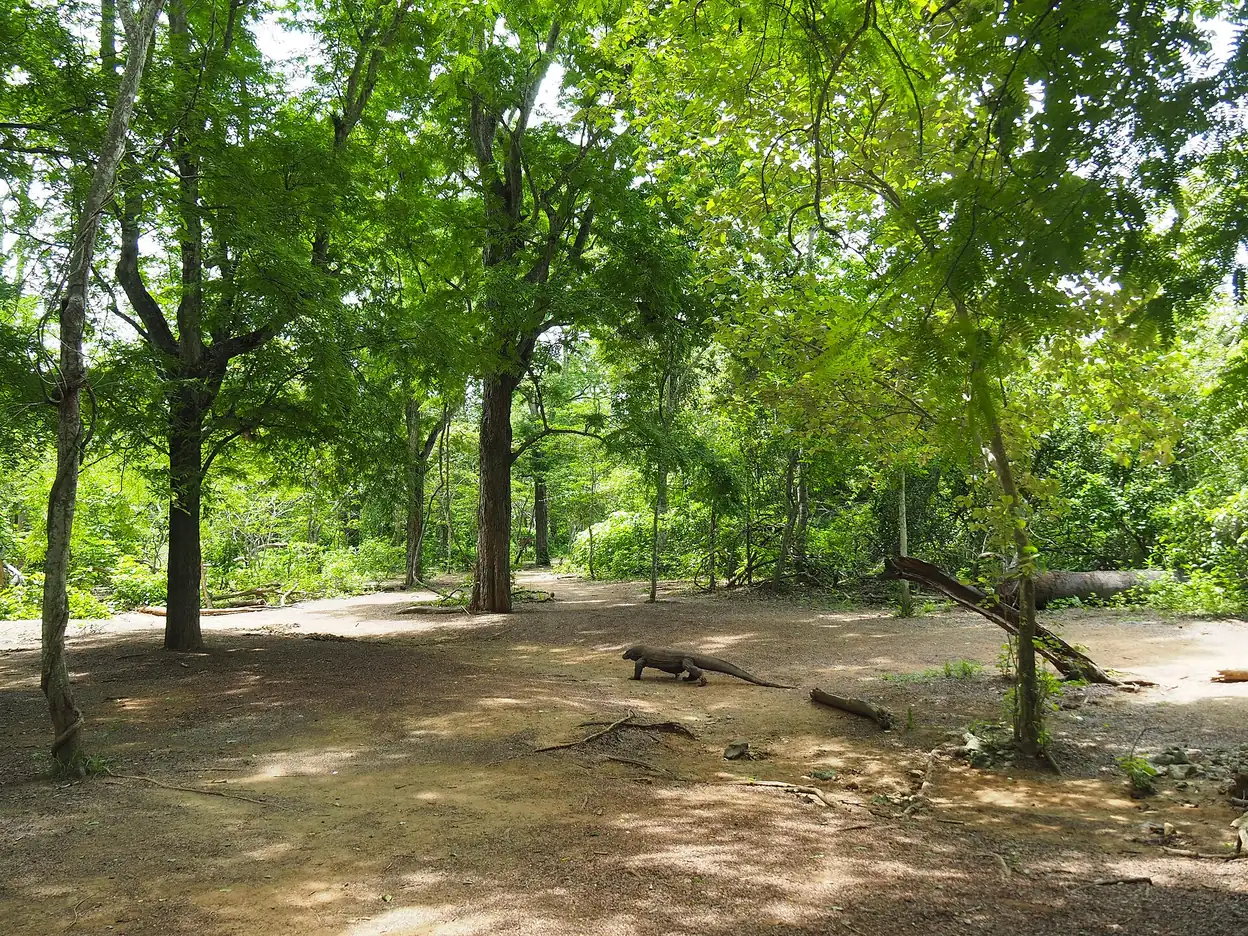
The realistic answer to where to see Komodo dragons is Komodo Island or Rinca, inside Komodo National Park in Indonesia's Lesser Sunda Islands. Both have named visitor sites, Loh Liang and Loh Buaya. Dragons also live on Gili Motang, Nusa Kode and parts of Flores, but the sources behind this page describe no visitor station at those places.
Which islands have wild Komodo dragons?
Ask which islands have Komodo dragons and you get a similar answer from five organisations, which agree about the core of the range and split at the edges. Every one of them names Komodo, Rinca and Gili Motang. The disagreement sits with Padar and Nusa Kode, and with how much of Flores gets mentioned. The table sets out each location, who lists it, and whether the published record shows a place a visitor can actually land.
| Location | Who lists dragons there | Who leaves it out or disputes it | Visitor site in published sources |
|---|---|---|---|
| Komodo Island | Park authority, Komodo Survival Program, UNESCO, IUCN World Heritage Outlook, San Diego Zoo Wildlife Alliance | Nobody | Yes: Loh Liang, named by the tourism ministry in August 2026 |
| Rinca | The same five | Nobody | Yes: Loh Buaya, named by the tourism ministry in August 2026 |
| Padar | Park authority, IUCN World Heritage Outlook, San Diego Zoo Wildlife Alliance | Left out by the Komodo Survival Program and UNESCO; disputed by Smithsonian's National Zoo | Padar is a named park site, which says nothing about dragons there |
| Gili Motang | The same five (UNESCO spells it Gili Motong) | Nobody | None described |
| Nusa Kode | Park authority, Komodo Survival Program, IUCN World Heritage Outlook, San Diego Zoo Wildlife Alliance | Not named in UNESCO's text | None described |
| Flores coasts (west and north) | Komodo Survival Program, UNESCO, IUCN World Heritage Outlook, San Diego Zoo Wildlife Alliance | Outside the park authority's list, which covers park islands only | Reserves are described; visitor access is not |
Sources for the table: the park authority's fauna page, the Komodo Survival Program's distribution page, UNESCO's listing, the IUCN World Heritage Outlook for 2025 and San Diego Zoo Wildlife Alliance. The IUCN Red List frames the same range more broadly, as Indonesia's Lesser Sunda Islands.
Where to see Komodo dragons: where do visitors actually go?
Two landing places carry almost all of the practical planning. The tourism ministry's August 2026 release names Loh Liang on Komodo and Loh Buaya on Rinca among the park sites running normally, and those are the two dragon locations a traveller can realistically build a trip around. Mongabay reported in 2015 that most dragons live on these same two islands. That report is old.
The trip starts in Labuan Bajo in western Flores, as Mongabay's piece also says. Wikivoyage reports several daily flights between Denpasar and Komodo Airport (LBJ) at Labuan Bajo, a claim to check against current schedules. Our guide on how to get to Komodo Island covers the crossing from there.
Sightings at both sites are common enough to draw visitors, yet they are never guaranteed, and we know of no park or academic dataset of sighting rates by island. Claims that one island beats the other trace back to operators and an undated encyclopedia line. Our Komodo vs Rinca comparison sets those opinions side by side without naming a winner.
Knowing the habitat helps set expectations for what the walk looks like. The Red List gives the species' habitat types as forest, savanna and marine intertidal. The Komodo Survival Program puts dragon habitat from lowlands up to 800 m above sea level and says the animals are more commonly found in lowlands surrounded by savanna hills. Picture open savanna hills as well as patches of forest when you think about heat and shade on a walk.
Why do sources list different islands?
Partly because the lists do different jobs. The park authority describes five large islands inside its own boundary, so Flores does not appear on that list even though dragons live there. A zoo or a conservation group is describing the species, so it can reach beyond the park. UNESCO's text is a site description, and it does not explain why it names fewer islands than the others.
Padar is the real conflict. The park authority and the IUCN Outlook still list it, while Smithsonian's National Zoo says no dragons have been seen there since the 1970s and blames the poaching of deer. Our page on Komodo dragons on Padar goes through both positions. While that conflict stands, do not make Padar your dragon stop.
All of these lists share one boundary. Komodo dragons in the wild live only in this part of Indonesia: UNESCO says the giant lizards exist nowhere else in the world, so a claimed wild sighting anywhere else deserves doubt.
Can you see them on Gili Motang or Nusa Kode?
Gili Motang and Nusa Kode have dragons on the published lists, and that is close to the limit of what can be said for a traveller. Wikipedia gives Gili Motang as about 30 km2 and home to about 100 dragons. Two sellers mention them, but none names a landing site or access rule, and no source behind this page describes a visitor station or a ranger post for guests there. That is different from confirmed as allowed or confirmed as banned.
If either island matters to you for research or filming, put the question to the park authority's own channels before you plan around it. A boat that passes close offshore is a different thing from permission to land.
Can you see dragons on Flores instead?
The animals are there, but a visit is another matter. According to the Komodo Survival Program, the Wae Wuul nature reserve is a hilly area of 1,484.44 ha south of Labuan Bajo, established in 1985. The same group calls the Wolo Tadho, Riung and Tujuh Belas Pulau reserves on the north coast the easternmost known stronghold of the species, in a region it describes as still void of mass tourism.
Those descriptions come from conservation work. They do not cover permits, guides or walking access, so they are no basis for a plan. Our page on Komodo dragons on Flores holds what is known about the reserves.
How much of the park is open to visitors?
Very little. National Geographic reported in 2020 that less than 5 percent of the park is open to tourists, which helps explain why nearly every plan to see Komodo dragons ends at the same two landings. The figure is six years old and comes from a magazine, so treat it as a sense of scale. Barefoot Yachts Indonesia, a charter operator, calls Nusa Kode quiet and rarely walked, for longer or specialised itineraries, and Responsible Travel, a tour seller, says Gili Motang's dragons are rarely glimpsed by visitors. Neither names a landing site or an access rule, so ask the park office before anyone sells you either stop. The documented walks are on our Komodo Island dragons and Rinca Island Komodo dragons pages, and the best time to see Komodo dragons has its own guide.
Is a zoo a real alternative?
For seeing the animal, yes. For seeing it in its own landscape, no. San Diego Zoo Wildlife Alliance says its zoo has housed dragons since 1968, and Smithsonian's National Zoo says it was the first zoo outside Indonesia to hatch them. The park authority adds a caution: it says past studies show zoo dragons live shorter lives, and that parthenogenesis was not found in wild individuals. Treat those as the authority's statements.
Several zoos name their animals or exhibits. San Diego Zoo lists two dragons, an adult at Komodo Kingdom and a juvenile in the Reptile House. Smithsonian's National Zoo in Washington says visitors can see a young male named Onyx at its Reptile Discovery Center. Audubon Zoo in New Orleans names a male called Raja in an outdoor habitat, and London Zoo sells an hour with a keeper before opening. In 2020 National Geographic also named the Louisville, Toledo, Pittsburgh and Bronx zoos. Check with the zoo before you travel for one, because those lines are undated or old.
A third option may come later. The forestry ministry told parliament in April 2026 that it plans ex-situ breeding outside the park as an alternative destination. It is only a plan, no site has been named, and nobody should book around it.
What else do people ask about where dragons live?
Where is the best place to see Komodo dragons?
The park and academic sources here do not rank the locations. Komodo Island and Rinca are the two places with named visitor sites, so the decision usually comes down to route and preference. Neither island can be shown to give better sightings, and neither can promise one.
Where can I see Komodo dragons outside Indonesia?
Only in zoos, since UNESCO says wild populations exist nowhere else. San Diego and Smithsonian's National Zoo both publish a history with the species. Ask any zoo directly whether dragons are on show before you travel for that reason.
Are wild Komodo dragons found on Gili Motang?
Yes. The park authority, UNESCO, the IUCN Outlook, San Diego Zoo Wildlife Alliance and the Komodo Survival Program all list it, and Wikipedia puts the number at about 100. Listing a population does not establish visitor access, and none is described.
Where are Komodo dragons most commonly seen?
Visitors meet them at Loh Liang on Komodo and Loh Buaya on Rinca because that is where visitors land. This reflects where people go, and it should not be read as a measure of where dragons are densest, because the sources give no sighting data by site.
Are there Komodo dragons on Padar today?
Sources conflict. The park authority and the IUCN Outlook list Padar, and Smithsonian's National Zoo says none have been seen since the 1970s. Plan on Padar for its own sake, and plan your dragon visit elsewhere.
Which sources support this page?
- Komodo National Park authority: fauna page
- Komodo Survival Program: distribution
- UNESCO World Heritage Centre: Komodo National Park
- IUCN World Heritage Outlook 2025
- San Diego Zoo Wildlife Alliance: Komodo dragon
- IUCN Red List: Komodo dragon
- Tourism ministry release, August 2026
- Mongabay, December 2015
- Wikivoyage: Komodo National Park
- Smithsonian's National Zoo: Komodo dragon
- Wikipedia: Gili Motang
- Komodo National Park authority: official site
- National Geographic: where Komodo dragons really live, 2020
- Barefoot Yachts Indonesia: where to see Komodo dragons
- Responsible Travel: Komodo dragon tours
- San Diego Zoo: Komodo dragon
- Audubon Zoo: Komodo dragon
- London Zoo: Komodo Dragon Experience
- Indonesian forestry ministry: visitor quota release
How do I reach the desk?
Tell the desk which location you are asking about and your dates, by WhatsApp at +62 811-3823-875 or by email to the desk. It answers with what the sources say, and only a written offer binds anyone. A request can lead to a paid booking, so we have a commercial interest in it.
Send the desk your dates and where you are coming from. The desk replies in writing.
Ask the desk on WhatsApp sales@komodoluxury.com