On this page
- Why does distance come first when photographing Komodo dragons?
- What happened to the visitor taking photos?
- What does dragon vision mean for your shot?
- What can you actually plan for?
- Do you need a permit for drones or filming?
- What do photographers ask before a dragon walk?
- Which published prices did we check?
- Which sources support this page?
- How do I reach the desk?
By See Komodo Dragons Editorial Desk
Sourced figures: prices in the table carry their source and check month. Fees change, and they are official or third-party figures, not our offers.
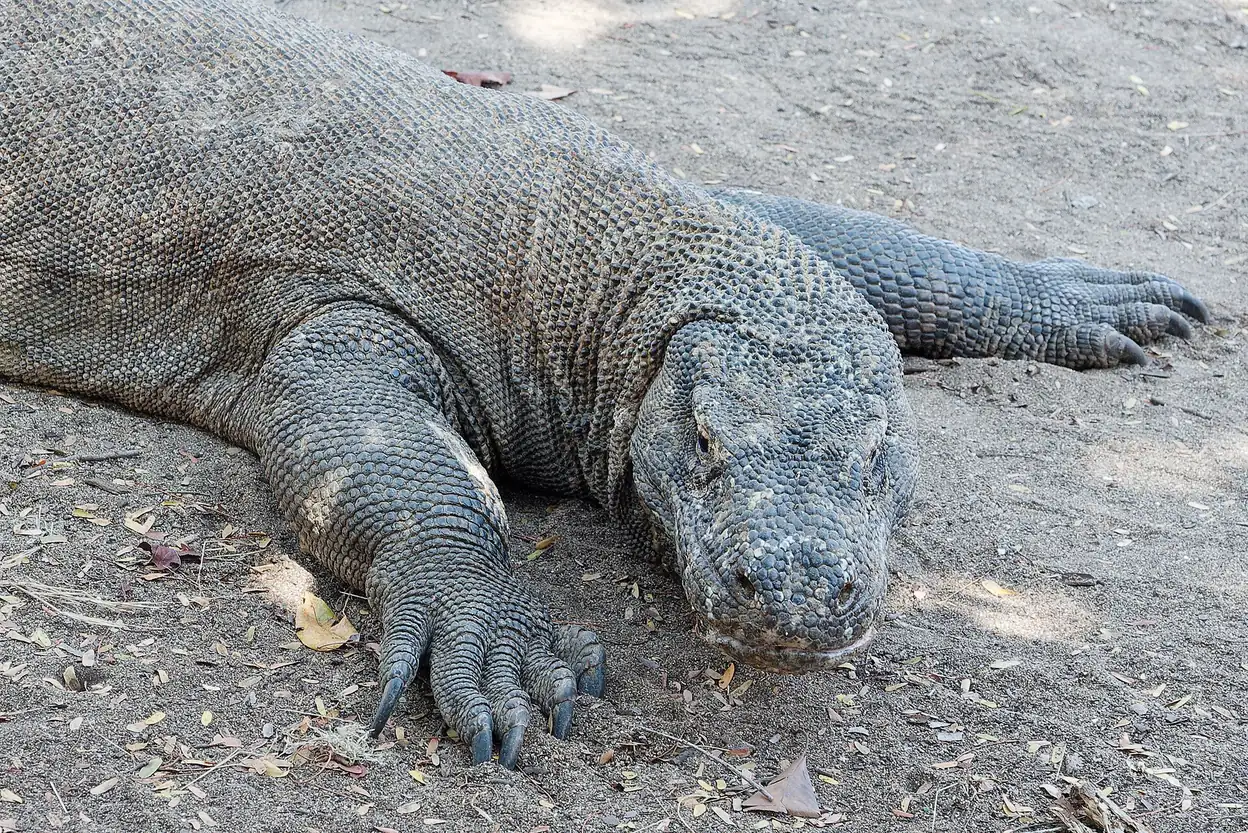
Photographing Komodo dragons starts with distance. Green Rinjani, a trekking operator, advises zoom over approaching, and a visitor was bitten in 2017 while taking pictures. Drones need authorisation and a stack of park paperwork, and filming falls under an official entry permit called SIMAKSI. The park publishes no flash rule we know of, so ask your ranger before using it.
Why does distance come first when photographing Komodo dragons?
Green Rinjani, a trekking operator, advises against walking into bushes, moving close for photos, or standing between a dragon and its path, and says to follow the ranger if a dragon moves toward the group. It suggests zoom instead of approaching. Read it as one operator's advice, since the park's own page does not go this far. The park's own ban on being too close is explained under Komodo National Park rules.
How close is too close? There is no single official number, and operators disagree, as how close you can get to Komodo dragons shows. For a photographer the working rule is that you shoot from wherever the ranger has placed you. Compose from there, and do not treat the ranger as someone to negotiate with for another few steps.
Selfies deserve a specific mention. No source names selfies or selfie sticks. The nearest published line is Green Rinjani's advice against moving close for photos, and that says nothing about which way you face or what you hold, so treat it as one operator's caution and not a rule about selfies. If you want yourself in the frame, ask the ranger whether and where it can be done.
What happened to the visitor taking photos?
The case dates from May 2017. According to the park's head, as reported by CBS News, a Singaporean tourist had ignored warnings and was taking pictures of dragons feeding when bitten on the leg. Smithsonian magazine adds the park head's statement that this happened outside a sanctioned area, with no official guide present.
That account comes from the park's side. It is one incident, and it gives no rate. What it does show is how a photo and a bite can be connected. Three separate factors are named in the park head's account: being in the wrong place, having no official guide, and having ignored warnings. The account does not blame the camera itself.
What does dragon vision mean for your shot?
Smithsonian's National Zoo puts a dragon's sight at about 300 m, with motion easier for it to detect than a still object. Dim light is its weakness, because its retinas contain only cones.
For a photographer, that is biology and not a technique. A long lens keeps you where the ranger put you, and it does not make you unseen, since any walking group is well within the distance the zoo describes. Where to stand and when to move are the ranger's call.
What about flash, given poor vision in dim light? The protocol and permit pages state no flash rule, and no study of its effect on dragons is known to us. That absence is not permission. Ask your ranger before using flash, and accept the answer.
Your entry time may decide that for you, because the park runs timed entry. If you want to think ahead, treat your session as fixed and consider which lens or phone mode copes with what you get.
What can you actually plan for?
Here is what photographers ask, set against what is published:
| Question | What is published | What is not |
|---|---|---|
| Zoom or walk closer? | Green Rinjani, a trekking operator, suggests zoom rather than approaching | An official rule about lenses |
| Best lens or focal length? | Nothing beyond the zoom advice | Any recommended focal length |
| Flash? | None published that we know of | Permission, a ban, or a measured effect on dragons |
| Selfie or selfie stick? | Green Rinjani warns against moving close for photos | A rule that names selfies or sticks |
| Tripod? | Nothing | A rule that names tripods |
| Drone? | Authorisation and paperwork required by the park | A guarantee that any application succeeds |
| Filming? | SIMAKSI entry permit named by the park | An exact line between a holiday clip and filming |
Any camera settings you read elsewhere are someone's opinion. Ours is limited: more reach gives you more options from where you are told to stand, and a phone will produce a smaller animal in the frame, which is a fair price. Do not offer food to bring a dragon into position, since the protocol bans feeding wildlife and a photo gives no exemption.
Do you need a permit for drones or filming?
For drones, yes. The visitor protocol prohibits flying without authorisation, and anyone flying without it can be instructed to stop and erase what was shot, which makes a flight on the off-chance a poor bet. To get authorisation, the park's procedure calls for a request letter, flight plan, safety assessment, unit registration, pilot licence, flight permit and insurance. That is a real project, so it will not suit a spur-of-the-moment idea on the boat. The official drone charge appears in the price table on this page, and it applies on top of the permit.
Komodo Resort, a dive operator, adds that drone use is restricted near nesting sites. We have this from an operator only, so raise it with the park when you apply. Anyone hoping for dragon footage from the air should assume that this is the first question to ask.
Filming is a separate matter. Filming of three kinds, commercial, non-commercial or documentary, appears on the park's SIMAKSI page as needing this official permit. Non-commercial is named too, so do not assume that having no client exempts you. Where a holiday clip ends and filming begins isn't defined on that page. If your plan goes beyond casual pictures, ask the park office first and keep the answer in writing.
What do photographers ask before a dragon walk?
How can I photograph a Komodo dragon without getting too close?
Use zoom, as the trekking operator Green Rinjani suggests, and shoot from where the ranger places you. Crop later if you need to, and do not step forward for a tighter frame.
Are flash photographs allowed near Komodo dragons?
The park pages are silent on flash, and we know of no study of how it affects dragons. Treat that as an open question and ask your ranger before you use it.
Are selfie sticks safe near Komodo dragons?
No source names selfies or sticks, so ask the ranger.
Can I fly a drone to film Komodo dragons?
Only with authorisation from the park, which requires paperwork including a flight plan, pilot licence and insurance. A dive operator also reports restrictions near nesting sites, so raise that with the park when you apply.
Do I need a permit to film Komodo dragons?
Yes, if your project counts as filming. SIMAKSI, the official entry permit of the park, covers commercial, non-commercial and documentary work. If you are unsure which side of the line you are on, ask the park office before you travel.
Which published prices did we check?
Official fees and public third-party listings, each with its source and the month we checked it. These are not our prices or offers. Fees change and sources sometimes disagree, so check the source before you rely on a figure.
| Item | Published price | Source | Checked |
|---|---|---|---|
| Drone operation charge, per unit per day (official tariff notice; permit still required) | IDR 2,000,000 | tnkomodo.ksdae.kehutanan.go.id | Nov 2026 |
Which sources support this page?
- Green Rinjani (trekking operator): safety information
- CBS News: tourist bitten, 2017
- Smithsonian magazine: Komodo dragon encounters
- Smithsonian's National Zoo: Komodo dragon
- Komodo National Park: visitor protocol
- Komodo National Park authority: drone flight permit
- Komodo Resort: park entrance fees
- Komodo National Park authority: SIMAKSI entry permit
- Komodo National Park authority: tariff notice
How do I reach the desk?
The desk can talk through a photography-focused visit, though it cannot issue or promise permits and it cannot promise any sighting. A request can lead to a paid booking, and that is our commercial interest. Use WhatsApp +62 811-3823-875 or email the desk.
Send the desk your dates and where you are coming from. The desk replies in writing.
Ask the desk on WhatsApp sales@komodoluxury.com