On this page
- Which mammals are part of the wildlife on Komodo and Rinca?
- Which birds might you notice?
- What is rare or hard to see?
- What can you see on Komodo Island versus Rinca?
- Which animals appear by season?
- What should you be careful of?
- What else do people ask about other wildlife?
- Which sources support this page?
- How do I reach the desk?
By See Komodo Dragons Editorial Desk
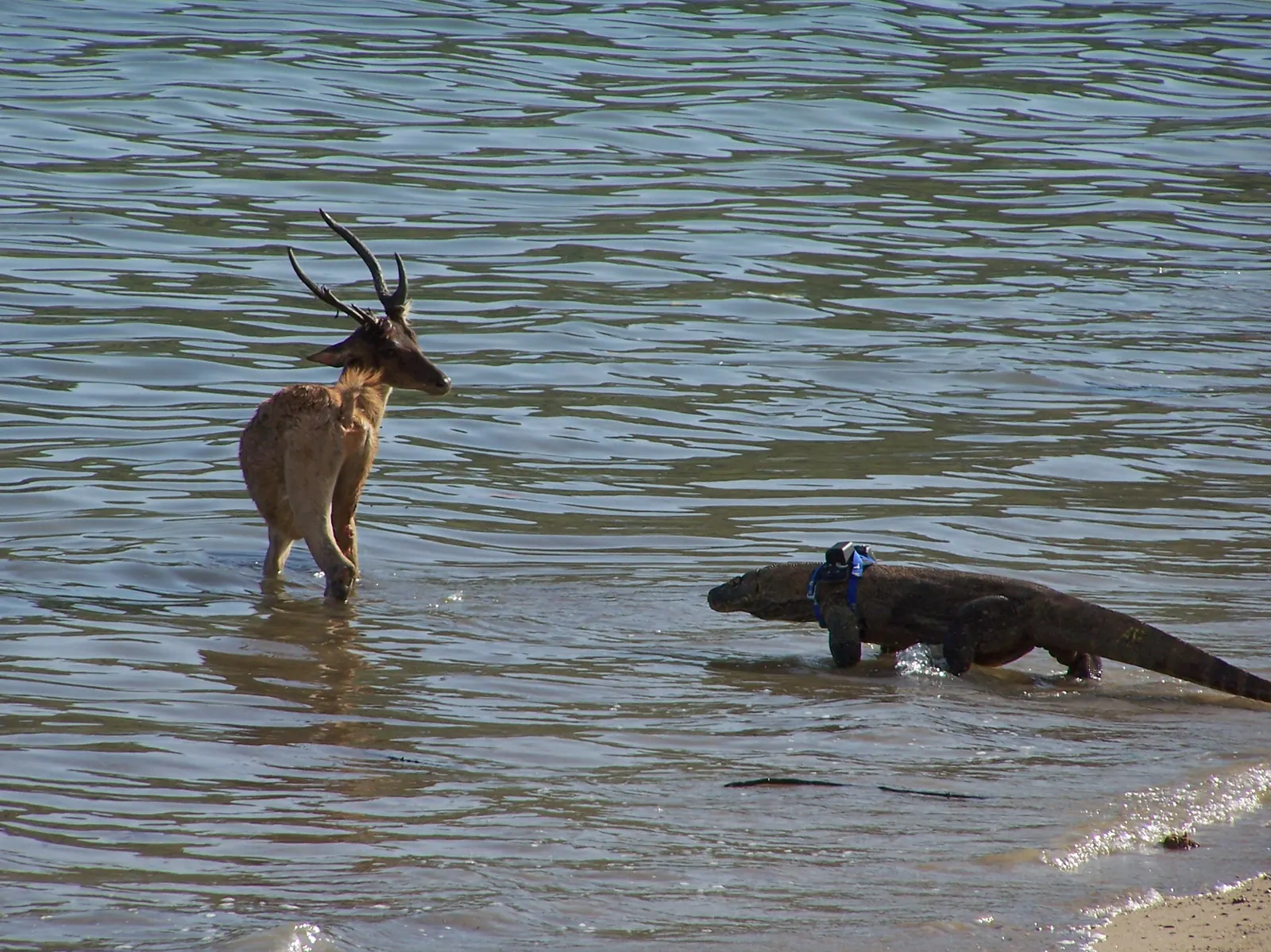
Wildlife on Komodo and Rinca goes well beyond dragons. Sources list Timor deer, water buffalo, wild boar, macaques, cockatoos and orange-footed scrubfowl, along with the seldom-seen Rinca rat and wild dog. Tree snails appear in the rains, and snakes deserve respect. Nothing is guaranteed on any walk, and what you notice will vary from one walk to the next.
Which mammals are part of the wildlife on Komodo and Rinca?
If you are asking what else you can see on Komodo Island or Rinca, start with the mammals. UNESCO records seven land mammal species in the park. Wikivoyage names Timor deer, wild horses, water buffalo, wild boar, macaques, palm civets and fruit bats. The park authority's list of dragon prey on its fauna page overlaps heavily, adding the Rinca rat.
| Animal | Who mentions it | What to expect |
|---|---|---|
| Timor deer | UNESCO, park authority, Wikivoyage | Named by UNESCO among the park's notable land species; prey for dragons |
| Water buffalo | Park authority, Wikivoyage | On the prey list; hard to mistake if one is around |
| Wild boar or wild pig | Park authority, Wikivoyage | On the park authority's prey list |
| Long-tailed macaque | Park authority, Wikivoyage | The monkey in this habitat; on the prey list |
| Wild horses | Wikivoyage | A community guide's listing, with no official count here |
| Palm civet | Park authority (as civet), Wikivoyage | Listed, though visitor sightings are not described |
| Fruit bats and flying foxes | Wikivoyage | An evening sight from the water |
Prey and predator share the same ground. Several of these animals are also dragon prey, a subject developed on our page about what Komodo dragons eat. The landscape helps: the IUCN Red List gives the species' habitat as forest, savanna and marine intertidal, and the Komodo Survival Program says dragon habitat runs up to 800 m above sea level. The same group says dragons are more commonly found in lowlands surrounded by savanna hills, so that is the country to picture.
Bats are the one group tied to a time of day, though that is still not a promise. Wikivoyage says flying foxes fill the twilight sky when returning by sea. If that interests you, ask your boat operator about timing, because it depends on the route home more than anything on the islands.
Which birds might you notice?
The birds of Komodo National Park run to 72 species on UNESCO's count, and two stand out in the official descriptions.
Lesser sulphur-crested cockatoo. The park authority names cockatoos as a second key species alongside the dragon, so the bird has official standing of its own. The authority counts about 1,031 of them on Komodo, Rinca and Bero. If you want to look for one, ask your ranger whether any are nearby.
Orange-footed scrubfowl. UNESCO lists it among the park's notable land species. Its importance goes further than its looks, because the bird builds mounds. San Diego Zoo Wildlife Alliance says female dragons use hillside nests, ground nests and mounds built by this scrubfowl. So a mound may be part of the dragon's own story. Ask the ranger about any you notice.
The rest of the list is for birders to work through on their own. If birds are your main reason for going, tell whoever arranges your trip before you travel so they can say what is realistic.
What is rare or hard to see?
The park authority itself calls two mammals hard to find. Set your hopes accordingly, and treat any sighting as exceptional.
- Rinca rat. Found only on Rinca, 30 to 40 cm long and hard to see, according to the park authority. Its restricted range makes it the kind of animal people search for by name, yet it remains a poor basis for planning a trip.
- Wild dog, or ajag. The park authority says it is very hard to encounter and that its numbers are unknown. The same page places it on Rinca and names Resort Loh Baru.
Civets belong in a similar group in practice. They appear on both the prey list and the Wikivoyage list, but nothing here describes a daytime visitor seeing one. Absence from your walk says nothing about absence from the island.
What can you see on Komodo Island versus Rinca?
Sources mostly describe the park as a whole, so the animals on Komodo Island and the animals on Rinca cannot be separated with any confidence. Only a few records name a place.
| Animal | Place named by the park authority |
|---|---|
| Rinca rat | Rinca only |
| Wild dog (ajag) | Placed on Rinca, with Resort Loh Baru named |
| Lesser sulphur-crested cockatoo | Komodo, Rinca and Bero |
| Tree snails | Loh Liang, the visitor site on Komodo, and Loh Sebita |
Deer, buffalo, boar and macaques appear in park-wide lists without a breakdown by island. Wildlife gives no reason here to pick one island over the other. Our Komodo vs Rinca comparison looks at what does differ, such as walks and boat times.
Which animals appear by season?
One seasonal record is clear. The park authority says tree snails appear at Loh Liang and Loh Sebita in the rainy season, December to February, and are hard to find in the dry season. It is the only animal we can tie to specific months with an official source.
Those are also months when getting there can be harder, as our guide to the best time to see Komodo dragons explains. Anyone planning around snails should weigh that first. Birds, deer and macaques may well vary through the year, but the sources do not say how.
What should you be careful of?
Wikivoyage warns of snakes on the island, including cobra and Russell's pit viper. It is a community guide and gives no detail on where or how often. Ask your ranger before you go if this worries you.
Feeding and litter are banned under the park's visitor protocol. Komodo Resort, a dive operator, also advises not bringing food on trails, without citing a study. The ranger's direction applies to all of these and not only to dragons. The sources give no list of what to do around any other animal here, so ask the ranger about anything that worries you on the day.
Marine life is a separate subject, so we leave it out of this article.
What else do people ask about other wildlife?
What other wildlife can I see while looking for Komodo dragons?
Sources mention Timor deer, water buffalo, wild boar, macaques, cockatoos and scrubfowl, and flying foxes at dusk from the water. None of these can be guaranteed on a given walk, and how much you notice depends on the time and the route.
Can I see monkeys in Komodo dragon habitat?
Possibly. The park authority lists the long-tailed macaque as dragon prey, and Wikivoyage lists macaques in the park. No source gives a figure for how often visitors see them. Do not offer them food, since feeding wildlife is banned.
Are there snakes near Komodo dragons?
Wikivoyage says yes, naming cobra and Russell's pit viper. It does not say how often walkers meet them. Ask your ranger.
What is a Rinca rat?
A rat found only on Rinca, 30 to 40 cm long and hard to see, according to the park authority. It also appears on the authority's list of dragon prey.
Which sources support this page?
- UNESCO World Heritage Centre: Komodo National Park
- Wikivoyage: Komodo National Park
- Komodo National Park authority: fauna page
- IUCN Red List: Komodo dragon
- Komodo Survival Program: distribution
- Komodo National Park: general information
- San Diego Zoo Wildlife Alliance: Komodo dragon
- Komodo National Park: visitor protocol
- Komodo Resort: visiting Komodo with kids, 2026
How do I reach the desk?
Hoping for something beyond dragons? Say what you would like to see on WhatsApp at +62 811-3823-875 or by email to the desk. It will tell you what it can and cannot confirm, and it does not promise any animal. A request can lead to a paid booking, so we have an interest in it, and only a written offer binds.
Send the desk your dates and where you are coming from. The desk replies in writing.
Ask the desk on WhatsApp sales@komodoluxury.com