On this page
- How big are Komodo dragons when fully grown?
- How much do Komodo dragons weigh?
- How does a dragon compare with a person?
- Why are the largest weights often exaggerated?
- How fast do they grow?
- Can you tell males from females by size?
- Are Komodo dragons larger on some islands?
- How long do they live?
- What else do readers ask about size?
- Which sources support this page?
- How do I reach the desk?
By See Komodo Dragons Editorial Desk
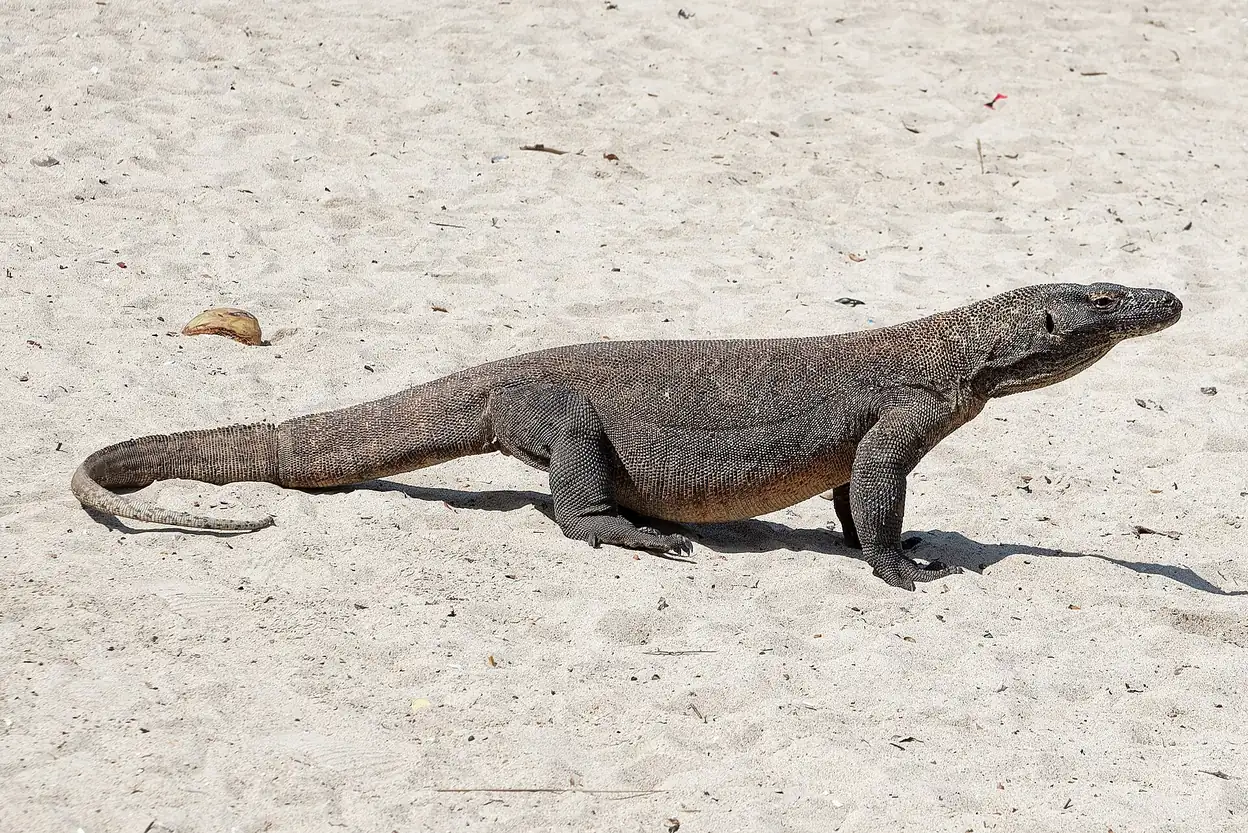
How big are Komodo dragons? UNESCO gives an average length of 2 to 3 m, and Smithsonian's National Zoo says wild dragons typically weigh about 70 kg. The largest verified specimen, per the zoo, reached 3.13 m and 166 kg. Published figures vary by source, and a single large meal can inflate a weight.
How big are Komodo dragons when fully grown?
Most sources settle around two to three metres, and the species holds the title of largest living lizard, according to UNESCO. The scientific name is Varanus komodoensis, recorded on the park authority's history page. Here is what each source says about Komodo dragon size, with no blending:
| Source | Length | Weight |
|---|---|---|
| UNESCO | Average 2 to 3 m | Not given |
| San Diego Zoo Wildlife Alliance | 1.8 to 3 m, males larger | Not given |
| Park authority | Can reach 3 m | Can reach 140 kg |
| National Geographic | Up to 10 feet | More than 300 pounds |
| Smithsonian's National Zoo | Largest verified: 3.13 m | Typical wild: about 70 kg. Largest verified: 166 kg |
In feet, three metres is a little under 10 feet, and the 3.13 m record is about 10.3 feet. The figures line up more closely than they first appear, because most describe a typical span or an upper limit. Only the Smithsonian's 3.13 m is offered as a verified record.
San Diego's lower figure of 1.8 m is useful for setting expectations. On a walk you may see a dragon well under the headline length and still be looking at a grown animal, particularly a female, since San Diego Zoo Wildlife Alliance says males are larger.
How much do Komodo dragons weigh?
Separate the typical animal from the extreme, because the gap is large. Smithsonian's National Zoo says wild dragons typically weigh about 70 kg. That is less than half of the 166 kg verified maximum, and it is half of the 140 kg the park authority's World Heritage page gives as a possible weight. National Geographic's more than 300 pounds converts to more than about 136 kg, so it sits near the park figure.
When a page gives a large figure for Komodo dragon weight, ask whether it means typical or possible. The second is what most large numbers describe.
How does a dragon compare with a person?
Take a person of 1.75 m as a yardstick. This is our arithmetic, since none of the sources makes the comparison. San Diego's lower figure of 1.8 m is about that person's height laid flat. A 3 m dragon is about 1.7 times as long. The typical 70 kg wild dragon weighs about what many adults weigh, spread over a low body.
Shoulder height and standing height go unreported. The numbers above describe length along the ground, which is why a dragon can sound enormous on paper and still look low and long when you see one lying on a path.
Why are the largest weights often exaggerated?
Food is part of the answer. Smithsonian's National Zoo says one meal can reach 80 percent of an adult's body weight, and suggests this may explain exaggerated weight claims. Take the typical 70 kg animal and run the sum: a full 80 percent meal adds 56 kg, for a total of about 126 kg until the meal is digested. That is our arithmetic, and it is an upper-end illustration only, but it shows how one animal can produce two very different numbers within days.
Our page on what Komodo dragons eat covers diet in detail. For size, this matters in one way: a heavy weight, reported without saying when the animal last ate, tells you little about how big the animal normally is. Weights from captivity and from wild animals may also differ, and a claim that does not say which it describes is harder to judge.
How fast do they grow?
Fast in the early years, on the zoo's figures. Smithsonian's National Zoo gives two points on the growth curve, and San Diego Zoo Wildlife Alliance adds a third that does not fit neatly.
| Age | Length | Weight | Source |
|---|---|---|---|
| Hatching | Average 40 cm | Under 100 g | Smithsonian's National Zoo |
| About four years | About 1.2 m, still living in trees | Not given | San Diego Zoo Wildlife Alliance |
| Five years | Average 2 m | About 25 kg | Smithsonian's National Zoo |
Going from 1.2 m at about four to 2 m at five looks too steep to be one animal's growth. The two zoos may be describing different animals or conditions, and neither says so. Read them as separate estimates. The Smithsonian figure does carry one surprise: at 2 m and 25 kg a five-year-old is long but light, at about a third of the typical adult weight. A dragon you see on a walk can be long and still be young, so length alone is a weak guide to age. More on the early years is on our page about the Komodo dragon mating season, which follows nesting and hatching.
Can you tell males from females by size?
Not reliably. Smithsonian's National Zoo says males are larger but that the sexes show no obvious visual difference. A large dragon is more likely male than female on that basis, and you could still be wrong about any one animal. The park authority adds a useful note: a female on nest duty stops eating and can look thinner and smaller than a male, so season can exaggerate the difference.
Are Komodo dragons larger on some islands?
We know of no source comparing body size between Komodo, Rinca, Padar, Gili Motang, Nusa Kode and Flores. Claims that one island offers bigger animals, such as the supplier quote on our Komodo vs Rinca page, come with no measurements.
How long do they live?
The sources conflict on Komodo dragon lifespan, and we show both. The park authority says dragons can live to 60, averaging 30 years for males and 20 for females. Smithsonian's National Zoo says about 30 in the wild and that the question is still being studied. These answers overlap at 30, but the upper limit differs widely, and neither source gives you a way to age a dragon you meet. Treat 60 as one source's upper limit. The park authority adds that past studies show zoo dragons live shorter lives, so an age reported from captivity is a weak guide to the wild.
What else do readers ask about size?
How large are Komodo dragons in the wild?
UNESCO gives an average length of 2 to 3 m, and San Diego Zoo Wildlife Alliance gives 1.8 to 3 m. The dragon you see on a walk could be smaller than these figures, especially if it is young or female.
How heavy are wild Komodo dragons?
About 70 kg is typical in the wild, per Smithsonian's National Zoo. Higher published figures describe upper limits: the park authority says 140 kg, and the zoo's largest verified specimen weighed 166 kg. One large meal can add a great deal.
What is the largest Komodo dragon on record?
Smithsonian's National Zoo gives the largest verified specimen as 3.13 m and 166 kg. Larger claims circulate, but a verified measurement is the standard to ask for when you read one.
Do Komodo dragons grow larger on some islands?
No published comparison of size between islands is available to cite, so any claim that one island has bigger dragons remains unproven.
How long do Komodo dragons live in the wild?
Smithsonian's National Zoo says about 30 years and calls the question still under study. The park authority says they can reach 60, with averages of 30 for males and 20 for females.
Which sources support this page?
- UNESCO World Heritage Centre: Komodo National Park
- Komodo National Park authority: history
- San Diego Zoo Wildlife Alliance: Komodo dragon
- Smithsonian's National Zoo: Komodo dragon
- Komodo National Park: international titles and management
- National Geographic: Komodo dragon
- Komodo National Park authority: fauna page
How do I reach the desk?
The desk can turn a request into a paid booking, which gives us a commercial interest. Spot a measured figure with a named source that we should add? Send it to the editors. For anything to do with a trip, see how the desk works first. The WhatsApp number is +62 811-3823-875, or you can email the desk.
Send the desk your dates and where you are coming from. The desk replies in writing.
Ask the desk on WhatsApp sales@komodoluxury.com